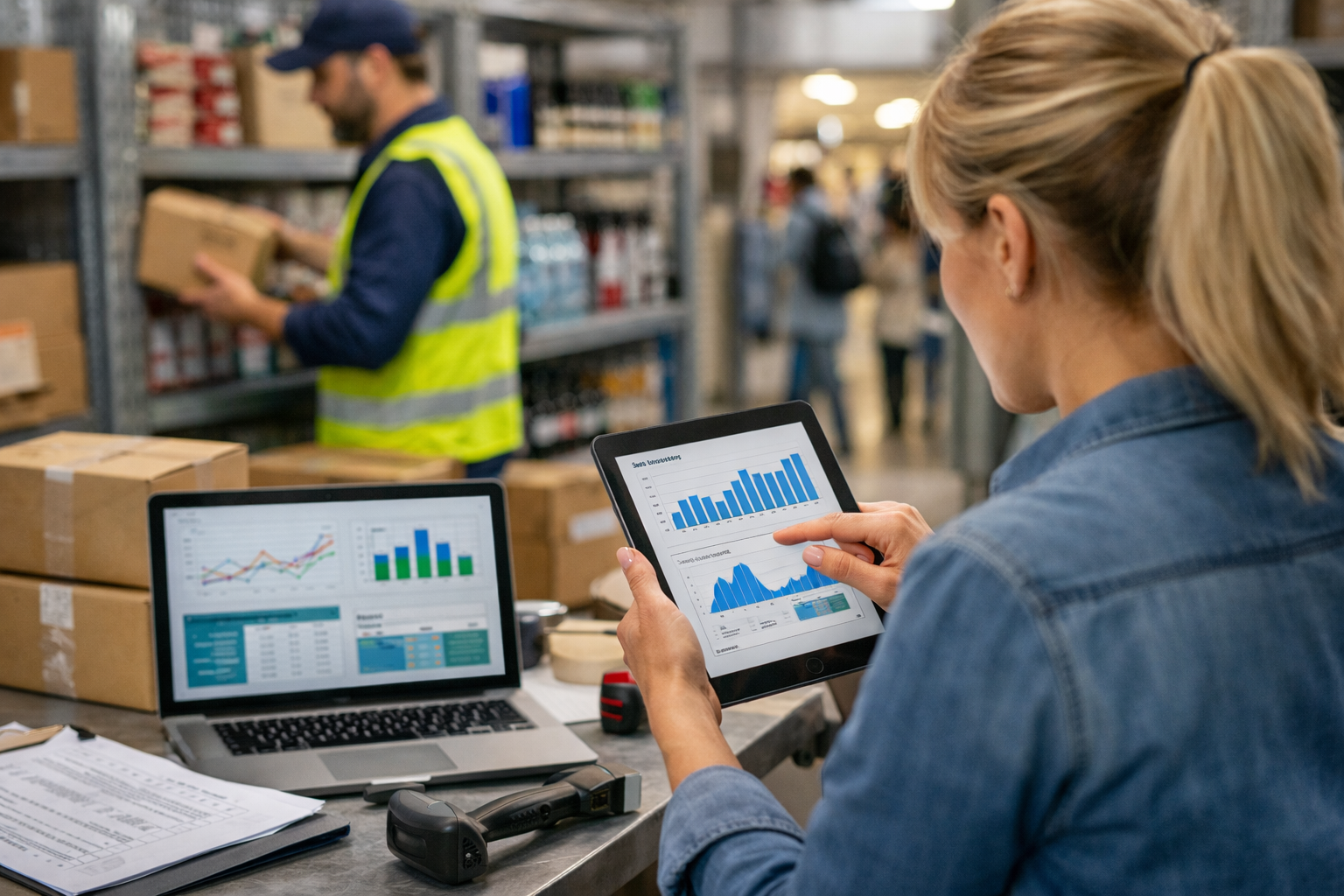
Retail teams often face a common problem. Some products run out just when demand increases, while others sit in excess, tying up capital. These situations usually come from one issue, lack of clarity on future demand.
This is where demand forecasting in retail becomes important. It uses data such as past sales, trends, and patterns to estimate what customers are likely to buy. When connected with retail replenishment planning, it helps teams decide when to reorder and how much stock to maintain.
Instead of reacting to stock issues, businesses can plan ahead. This article explains how demand forecasting improves replenishment decisions, reduces risks, and brings more control to retail operations.
What Is Demand Forecasting in Retail?
Demand forecasting in retail is the process of predicting future product demand using data rather than assumptions. It helps businesses understand how much of a product customers are likely to buy in a given period.
Retail demand forecasting typically relies on multiple data points, including past sales data, seasonal demand patterns, and broader market trends. By analyzing these factors, businesses can identify patterns and anticipate changes in demand more accurately.
Demand forecasting for inventory is not about making rough estimates. It is about using structured data to improve decision-making. When done correctly, it gives retailers a clearer view of future demand, helping them plan inventory levels and replenishment more effectively.
What Is Retail Replenishment Planning?
Retail replenishment planning is the process of deciding when to restock products and how much inventory to order. It ensures that the right products are available at the right time without creating excess stock.
The main purpose of inventory replenishment planning is to maintain product availability while avoiding overstocking. If stock runs out, sales are lost. If too much stock is held, it increases storage costs and blocks working capital.
This is where retail inventory management depends heavily on demand forecasting. Without accurate forecasts, replenishment decisions become inconsistent. Teams may order too late or order more than required. When forecasting and replenishment work together, inventory decisions become more stable and predictable.
Why Demand Forecasting Is Critical for Replenishment
Demand forecasting plays a central role in making replenishment planning more effective. It connects future demand with present inventory decisions, helping businesses act at the right time.
• Improves Replenishment Timing
One of the key demand forecasting benefits is better timing. Instead of waiting for stock to drop, businesses can anticipate demand and plan replenishment in advance. For example, if a product shows a steady increase in sales, forecasting helps teams reorder before it reaches critical levels.
• Reduces Stockouts
Accurate forecasts ensure that products are available when customers need them. In retail, fast-moving items can sell out quickly. Without forecasting, teams react after stock runs low. With proper inventory planning, they can maintain consistent availability and avoid lost sales.
• Prevents Overstocking
Demand forecasting also helps avoid ordering more than required. For seasonal products, such as winter apparel or festive items, overestimating demand can lead to excess inventory. Forecasting helps align stock levels with actual demand, reducing holding costs and waste.
• Supports Better Planning
When decisions are based on demand data instead of assumptions, planning becomes more reliable. Teams can align purchasing, inventory movement, and sales strategies more effectively. This leads to smoother operations and fewer last-minute adjustments.
Challenges Without Demand Forecasting
When demand forecasting is missing or weak, replenishment planning becomes reactive. Teams often take action only when stock levels are already low, leaving little time to respond effectively.
In such situations, decisions are driven by urgency rather than data. Orders are placed quickly, often without a clear understanding of actual demand. This leads to panic ordering, where the focus shifts to fixing immediate gaps instead of planning ahead.
As a result, inventory becomes inconsistent. Some products go out of stock, while others accumulate in excess. This imbalance is one of the most common retail inventory challenges faced by growing businesses.
Common issues include:
• Replenishment decisions triggered too late
• Frequent stockouts of fast-moving products
• Excess inventory for slow-moving items
• Increased dependency on manual tracking and follow-ups
• Lack of coordination between planning and buying teams
How Demand Forecasting Improves Retail Operations
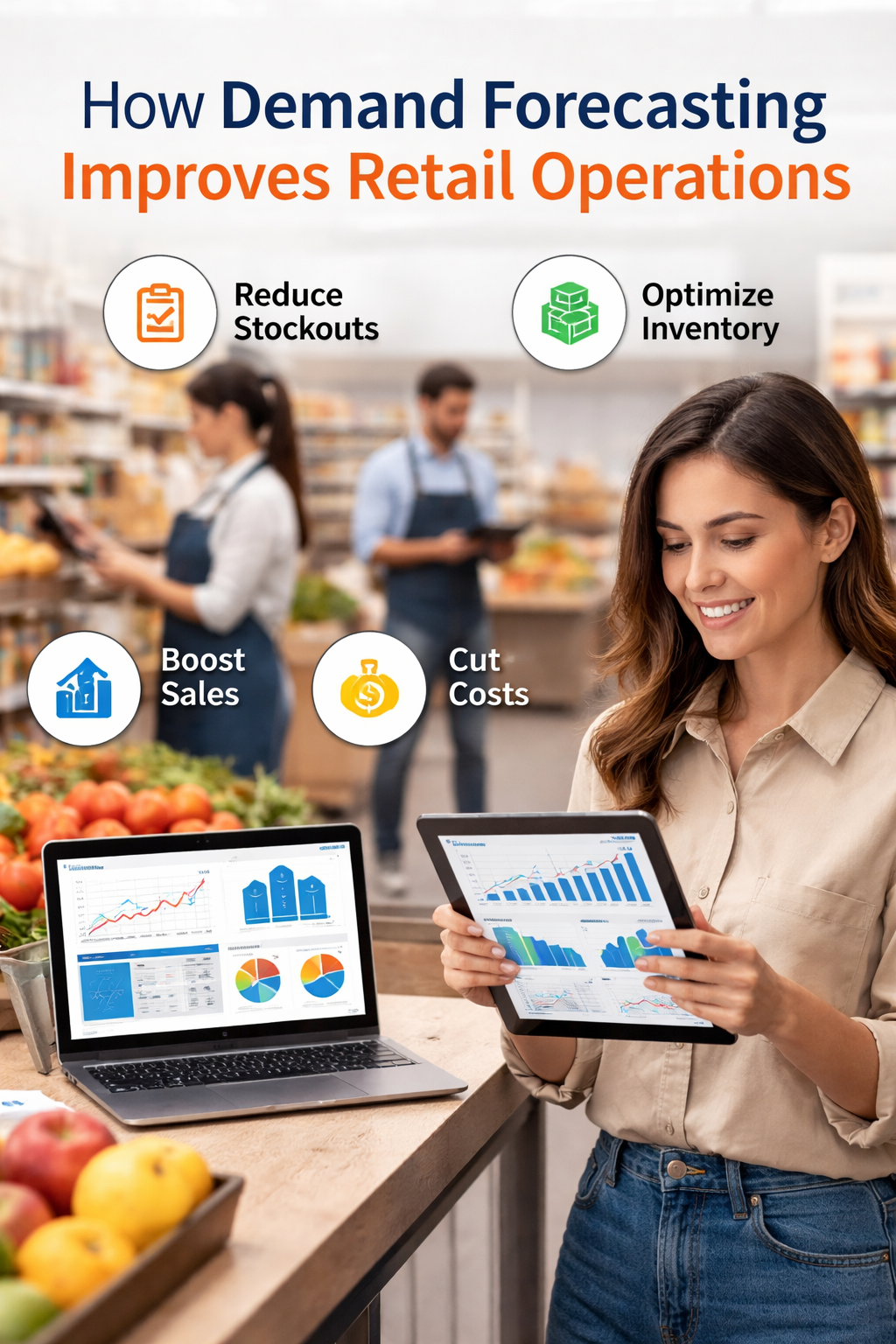
Demand forecasting brings structure and clarity to retail operations by providing a forward-looking view of demand. Instead of relying only on current stock levels, teams can understand what is likely to happen next.
One of the biggest advantages is better visibility into future demand. Teams can see patterns in product movement and anticipate changes before they impact inventory. This allows them to act earlier and avoid last-minute decisions.
With clearer insights, decision-making becomes faster and more confident. Teams no longer need to spend time validating data or relying on assumptions. They can plan based on reliable inputs, improving overall efficiency.
Demand forecasting also improves coordination between teams. Buying, planning, and inventory functions can work with the same understanding of demand, reducing misalignment and delays.
Another key benefit is the reduction of manual effort. Instead of tracking data across multiple sources, teams can rely on structured forecasting to guide decisions. This leads to smoother operations and more consistent outcomes across the business.
Role of Demand Signals and Stock Cover in Planning
Effective replenishment planning depends on two important concepts: demand signals and stock cover.
Demand signals are real-time indicators of how products are selling. They reflect actual customer behavior and help businesses understand which products are moving faster and which are slowing down. Using real-time demand signals allows teams to respond to changes in demand more accurately.
Stock cover, on the other hand, shows how long the current inventory will last based on the rate of sales. It helps answer a critical question: how many days of stock are available before replenishment is required.
When these two concepts are combined, planning becomes more precise. Demand signals indicate what is happening now, while stock cover logic helps determine how long the inventory can sustain that demand.
How Technology Enables Better Demand Forecasting
Demand forecasting in retail has moved from manual estimation to system-driven planning. Relying on spreadsheets and past experience often leads to delays, inconsistencies, and limited accuracy.
With the right technology, teams can analyze data in real time and understand how demand is changing across products and locations. Forecasting becomes more consistent as systems automate calculations and reduce dependency on manual inputs.
Modern platforms also integrate multiple data sources such as sales, inventory, and supply chain information. This creates a connected view, allowing teams to plan with better clarity.
Allokator is built to enable this shift. It uses real-time demand signals and stock cover logic to help teams plan replenishment more accurately. Instead of reacting to stock situations, businesses can make timely, data-driven decisions and maintain better control over inventory.
Conclusion
Retail businesses do not struggle because they lack data. The real challenge is using that data effectively to make timely decisions.
Demand forecasting in retail brings clarity to what lies ahead. By understanding future demand, teams can plan replenishment with greater accuracy instead of relying on assumptions or reacting to situations as they arise.
When forecasting is aligned with replenishment planning, decisions become more structured. Businesses can act at the right time, maintain balanced inventory levels, and reduce uncertainty in daily operations.
The result is better control, fewer disruptions, and more predictable outcomes across the supply chain. To take this approach further, explore how Allokator helps you plan replenishment using real demand signals and stock cover logic.
Frequently Asked Questions
1. How often should demand forecasting be updated in retail?
Demand forecasting should be updated regularly based on business scale and product movement. For fast-moving categories, updates may be needed weekly or even daily. For slower-moving products, monthly updates may be sufficient. Frequent updates help capture changing trends and improve accuracy over time.
2. What factors can affect the accuracy of demand forecasting?
Several factors can impact forecasting accuracy, including sudden changes in customer behavior, seasonality shifts, promotions, and external market conditions. Data quality also plays a major role. Incomplete or outdated data can lead to incorrect predictions and poor planning decisions.
3. Can demand forecasting work for new products with no sales history?
Yes, but it requires a different approach. For new products, businesses often rely on similar product performance, market trends, and initial sales patterns. Over time, as actual sales data becomes available, forecasts can be refined and made more accurate.
4. How does demand forecasting support multi-location retail businesses?
In multi-location setups, demand can vary across stores or regions. Demand forecasting helps identify location-specific patterns, allowing businesses to distribute inventory more effectively and avoid imbalances between stores.
5. What is the difference between demand forecasting and demand planning?
Demand forecasting focuses on predicting future demand based on data. Demand planning goes a step further by using those forecasts to make operational decisions such as purchasing, replenishment, and inventory allocation.
6. How can businesses improve demand forecasting accuracy over time?
Accuracy improves with consistent data tracking and refinement. Businesses should regularly review forecasts against actual sales, adjust models based on trends, and incorporate real-time data wherever possible. Using structured systems instead of manual methods also improves reliability.