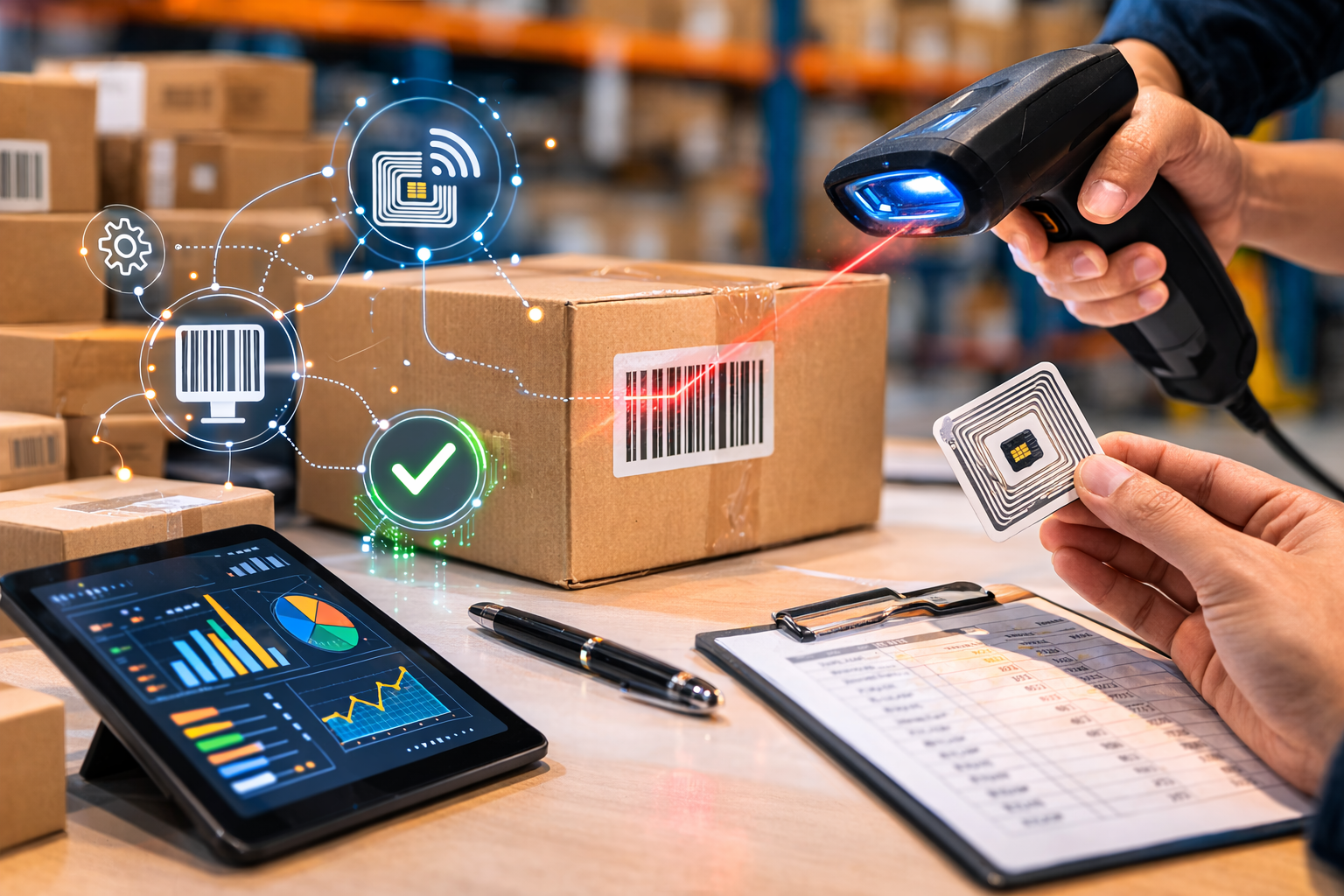
Inventory errors create expensive problems for growing brands. Wrong stock data can lead to stockouts, excess inventory, delayed dispatch, poor order fulfillment, and missed sales. In many warehouses, these issues start with manual counting, spreadsheet-based updates, and slow data entry across multiple touchpoints.
As order volumes rise, these gaps become harder to control. That is where a barcode inventory system and RFID inventory management can make a real difference. Both help businesses track stock with more speed and accuracy, but they work in different ways and suit different operational needs. In this article, we’ll look at how each method works, how they differ, where they fit best, and how they improve accuracy across warehouse operations.
Why Inventory Accuracy Matters in Retail and Warehousing
Inventory accuracy affects almost every part of retail and warehouse performance. When stock records are wrong, businesses make decisions based on data that does not match the real stock on hand. That often leads to stockouts for fast-moving items, excess buying of slow-moving products, and delays in picking, packing, and dispatch. Wrong inventory data also creates waste by increasing urgent transfers, repeat checks, order cancellations, and lost sales opportunities.
The impact goes further than warehouse operations. Inaccurate stock records weaken replenishment planning, making it harder to refill the right products at the right time. They also hurt fulfillment accuracy, which can lead to partial orders, late deliveries, and unhappy customers. Over time, these issues damage customer trust and make growth harder to manage.
As brands scale across warehouses, stores, and sales channels, manual tracking becomes less reliable. That is why growing businesses need an automated inventory tracking system to keep stock visibility accurate, current, and easier to act on.
What Is a Barcode Inventory System?
A barcode inventory system is a stock tracking method that uses printed barcode labels and scanners to record item movement at each warehouse stage. Each product, carton, or pallet is assigned a unique barcode that stores product data in a machine-readable format. When staff scan the code, the system pulls the item details and updates inventory records instantly.
How Barcode-Based Inventory Tracking Works
In a warehouse barcode scanning system, printed barcode labels are placed on products, bins, shelves, cartons, or pallets. Staff then use handheld scanners or fixed scanning devices to read these labels during daily operations. Each scan captures a stock event and updates the inventory system with the latest item status and location.
This process supports inventory updates during receiving, putaway, picking, packing, transfers, and dispatch. Instead of relying on manual entry or paper logs, teams can scan items as they move through the warehouse. That helps reduce recording errors, speeds up stock handling, and keeps inventory data more accurate across every touchpoint.
Where Warehouse Barcode Scanning Systems Work Best
A warehouse barcode scanning system works best in structured operations where teams need clear, item-level visibility and consistent stock movement updates. It is widely used in retail and warehouse environments because it is practical, easy to deploy, and effective for day-to-day inventory control.
• SKU-level tracking: Helps teams track individual products accurately by SKU, making it easier to monitor stock quantities, identify missing items, and reduce mismatches in inventory records.
• Bin-level movement: Supports location-based inventory control by recording when stock moves from one bin, shelf, or storage area to another within the warehouse.
• Order picking: Improves picking accuracy by letting warehouse staff scan items before confirming picks, which reduces wrong-item errors and improves order fulfillment.
• Cycle counts: Makes routine stock audits faster and more reliable by allowing teams to scan and verify inventory without shutting down warehouse operations.
Benefits of Barcode Inventory Systems
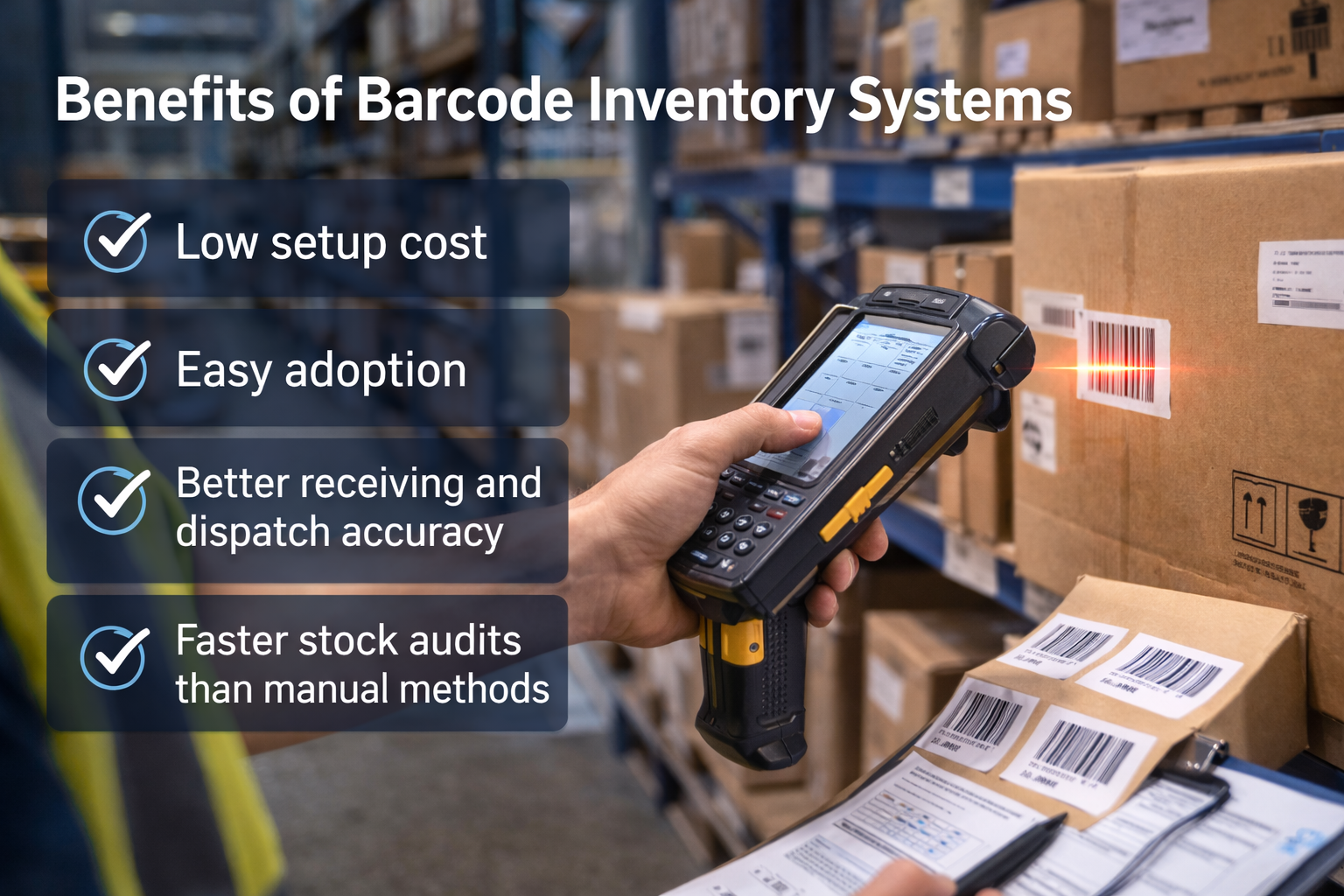
Barcode inventory systems are a practical choice for businesses that want better stock control without adding too much complexity at the start. They are widely used because they improve day-to-day warehouse accuracy while staying simple for teams to use.
• Low setup cost: Barcode systems usually need printed labels, scanners, and software integration, which makes them more budget-friendly than many advanced tracking methods.
• Easy adoption: Warehouse teams can learn barcode scanning quickly, so businesses can put the system into use without a long training period.
• Better receiving and dispatch accuracy: Scanning items during inbound and outbound processes helps confirm the right products, quantities, and locations, which cuts errors during stock handling.
• Faster stock audits than manual methods: Barcode scanning makes cycle counts and stock checks quicker, helping teams verify inventory with less manual effort and fewer counting mistakes.
What Is RFID Inventory Management?
RFID inventory management uses radio frequency technology to identify and track inventory as it moves through a warehouse or retail operation. Unlike barcode scanning, RFID does not need a scanner to be pointed directly at each label. This makes it useful for faster, more automated stock visibility in high-volume environments.
How RFID Inventory Management Works
An RFID system uses RFID tags attached to products, cartons, pallets, or containers. These tags store item data that can be read by RFID readers placed at warehouse entry points, storage zones, packing stations, or dispatch areas. When tagged inventory passes within range, the reader captures the data automatically and sends it to the inventory system.
Because this process does not require direct line-of-sight scanning, teams can record stock movement with less manual effort. That makes RFID inventory management a strong option for businesses that want quicker updates and better visibility across busy warehouse operations.
What an RFID Warehouse Tracking System Can Track
An RFID warehouse tracking system gives businesses better visibility into how inventory moves through different stages of storage and fulfillment. It can support tracking at multiple levels and handle larger scan volumes with less delay.
It can track item movement as stock enters, moves within, and exits the warehouse. It can record location changes when inventory shifts between zones, shelves, bins, or staging areas. It can also provide visibility at pallet, carton, and item level, depending on how the tags are deployed. Since RFID readers can capture multiple tagged items quickly, the system also supports high-speed bulk reading in faster warehouse environments.
Benefits of RFID in Inventory Operations
RFID helps businesses improve inventory control by making stock tracking faster and less dependent on manual scanning.
It supports faster counting because multiple items can be read in a single pass. It reduces missed scans since staff do not need to scan each item one by one. It improves real-time stock visibility by updating item status and movement more quickly. It also strengthens traceability by giving teams a clearer view of where inventory has moved across the operation.
How Barcode and RFID Automation Improve Inventory Accuracy
Barcode and RFID systems both improve inventory accuracy by replacing slow, manual stock recording with more consistent and trackable data capture. While they work differently, both methods help warehouses keep system inventory closer to physical inventory and reduce the gaps that usually lead to stock errors.
Reduces Manual Entry Errors
Manual inventory updates often create mistakes through wrong quantities, skipped entries, duplicate records, or delays in recording stock movement. Barcode and RFID automation reduce these issues by capturing stock data directly during warehouse activity. That means fewer hand-typed entries and fewer chances for human error.
Improves Receiving Accuracy
Receiving is one of the most important points for inventory accuracy. If stock is recorded incorrectly at inbound stage, the same error carries into storage, picking, and replenishment. Barcode scanning helps teams verify incoming SKUs, quantities, and labels during receipt. RFID goes a step further by allowing faster validation of tagged inventory as it enters the warehouse. Both methods help businesses record stock more accurately from the start.
Makes Stock Counts Faster and More Reliable
Physical stock checks take time and often create disruption when done manually. Barcode systems make cycle counts easier by allowing teams to scan items quickly during audits. RFID makes this process even faster by reading multiple items at once. In both cases, counting becomes more dependable and less time-consuming, which helps warehouses verify inventory more often.
Tracks Movement Across Warehouse Touchpoints
Inventory accuracy depends on more than just receiving and counting. Stock moves through putaway, storage, picking, packing, transfer, and dispatch. Barcode and RFID automation help track these movements at each stage. This creates a better record of where inventory is, where it moved, and when the movement happened, which reduces missing stock and location-based errors.
Improves Replenishment Planning
Accurate stock data leads to better replenishment decisions. When businesses know what is available, what is moving, and what is running low, they can refill inventory more effectively. Barcode inventory systems and RFID inventory management both improve the quality of stock data used for planning. This helps reduce stockouts, over-ordering, and slow-moving excess inventory.
Cuts Stock Mismatches Between Physical and System Inventory
One of the biggest warehouse problems is the gap between actual stock on the floor and stock recorded in the system. Barcode and RFID automation help close that gap by updating inventory during real warehouse activity rather than after the fact. With better scan discipline and faster data capture, businesses can keep inventory records more accurate and more useful for daily operations.
RFID vs Barcode Inventory Tracking: What’s the Difference?
Both systems improve inventory accuracy, but they do it in different ways. Barcode tracking is more direct and cost-friendly. RFID is faster and better suited for operations that need less manual effort and more live visibility.
| Factor | Barcode Inventory Tracking | RFID Inventory Tracking |
| Scanning method | Scans printed barcode labels one at a time | Reads RFID tags through radio frequency |
| Line-of-sight requirement | Yes, the scanner must point at the barcode | No direct line-of-sight needed |
| Speed | Good for controlled, step-by-step scanning | Faster for high-volume movement |
| Bulk reading | Limited, usually one item at a time | Can read many tagged items at once |
| Implementation cost | Lower setup cost | Higher upfront investment |
| Accuracy improvement | Strong improvement over manual methods | Stronger in fast-moving and large-scale operations |
| Warehouse suitability | Best for structured workflows with manageable volume | Best for larger warehouses and faster stock movement |
| Best use case | SKU scans during receiving, picking, packing, and dispatch | Real-time tracking, rapid counts, and bulk inventory visibility |
In practical terms, barcode is often the better fit for businesses that want a controlled setup with lower cost and quick adoption. RFID makes more sense when scale, speed, and real-time visibility matter more than upfront simplicity.
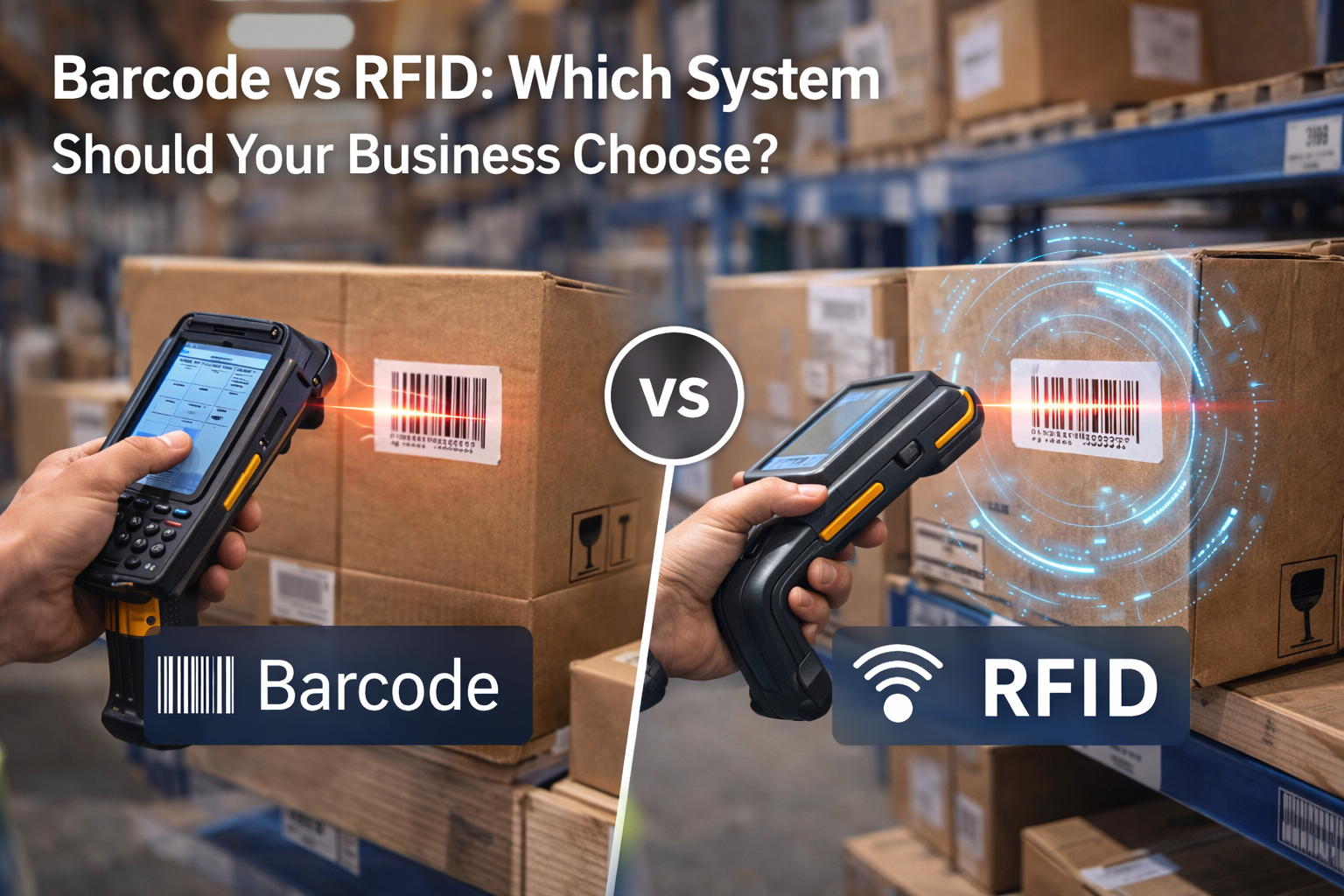
Barcode or RFID: Which System Should Your Business Choose?
There is no one-size-fits-all answer here. The right system depends on how your warehouse runs today and what kind of inventory visibility you need tomorrow.
Choose a Barcode Inventory System If
A barcode inventory system is usually the better fit when:
• your budget is tighter and you want a more affordable starting point
• your SKU count is manageable and workflows are not too complex
• manual scanning at each touchpoint is acceptable
• you want a faster rollout with less process change for the warehouse team
Barcode works well for businesses that want better stock control without making the operation too heavy or expensive from day one.
Choose RFID Inventory Management If
RFID inventory management is a stronger fit when:
• inventory volume is high and stock moves quickly
• speed matters across receiving, counting, and movement tracking
• you need real-time location visibility across zones or storage points
• cycle counts already take too much time and effort
RFID is often a better option for businesses that are dealing with scale, frequent stock movement, and growing operational pressure.
When a Hybrid Model Makes Sense
In some warehouses, the best answer is not barcode or RFID. It is both.
A hybrid setup can work well when:
• barcode is used for standard workflows such as receiving, picking, and dispatch
• RFID is used for high-value inventory, fast-moving items, or areas where live visibility matters more
• the business wants to improve accuracy in phases instead of changing everything at once
This gives teams more control over cost while still improving visibility where it matters most.
How Automated Inventory Tracking Systems Support Smarter Warehouse Operations
An automated inventory tracking system does more than record stock. It gives warehouse teams better control over daily operations and better data for planning what happens next.
Here’s what that looks like in practice:
• Live inventory visibility: Teams can see what stock is available, where it is stored, and how it is moving.
• Stock movement updates: Inventory records stay current during receiving, putaway, transfers, picking, packing, and dispatch.
• Better replenishment decisions: More accurate stock data helps teams refill the right products at the right time.
• Fewer stockouts and overstocks: Better visibility cuts guesswork and reduces avoidable buying or missed demand.
• Cleaner warehouse operations: Clearer stock records mean less searching, fewer manual checks, and fewer process gaps.
• Stronger planning across channels: When warehouse data is accurate, businesses can plan better across stores, marketplaces, and B2B orders.
For a platform like Supplymint, this matters because inventory tracking should not sit in isolation. It should support better planning, faster decisions, and smoother warehouse execution across the full supply chain flow.
Common Challenges in Implementing Barcode or RFID Tracking
Even the right system can underperform if the setup is weak. Most inventory tracking issues do not come from the technology alone. They usually come from gaps in process, execution, or system connection.
Some common issues include:
• Wrong tagging or labeling: If labels or tags are missing, damaged, or mapped incorrectly, stock data becomes unreliable.
• Poor process design: A system will not fix broken warehouse steps on its own. If scan points are unclear, errors still happen.
• Scanner or reader placement issues: In barcode and RFID setups, poor device placement can lead to missed events or weak tracking coverage.
• Staff adoption gaps: If teams skip scans or do not follow the process consistently, inventory accuracy drops fast.
• Integration issues with inventory software: When tracking tools do not connect properly with the core inventory platform, data delays and mismatches follow.
Final Words
Inventory accuracy becomes harder to control as warehouses expand, order volumes increase, and stock moves through more operational points. That is why both barcode and RFID automation play an important role. A barcode inventory system helps businesses improve stock control through structured scanning, while RFID inventory management adds faster data capture, stronger traceability, and better visibility in high-volume environments. The right fit depends on warehouse size, process complexity, and the pace of inventory movement. For businesses looking to strengthen inventory control and supply chain execution with Supplymint, book a demo of DigiProc to see how it can support barcode- and RFID-driven inventory workflows.
Frequently Asked Questions
1. What is the difference between RFID and barcode inventory tracking?
Barcode tracking needs a scanner to read each printed code directly, one item at a time. RFID uses tagged items and radio frequency readers, so inventory can be captured faster and without direct line-of-sight scanning.
2. Is RFID more accurate than barcode scanning in warehouses?
RFID can improve accuracy more in fast-moving and high-volume warehouse environments because it reduces missed scans and supports bulk reading. Barcode is still highly accurate when warehouse teams follow scanning steps consistently.
3. What is a warehouse barcode scanning system used for?
A warehouse barcode scanning system is used to track stock during receiving, storage, picking, packing, transfers, and dispatch. It helps businesses keep item records updated with each movement.
4. How does an automated inventory tracking system reduce stock errors?
It reduces stock errors by replacing manual entry with scan-based or tag-based data capture. This helps cut skipped entries, wrong quantities, delayed updates, and mismatches between physical stock and system stock.
5. Which is more cost-effective: barcode or RFID inventory management?
Barcode is usually more cost-effective at the start because setup is simpler and hardware costs are lower. RFID often needs more upfront investment, but it can deliver stronger returns in larger operations where speed and real-time visibility matter more.
6. Can barcode and RFID systems be used together?
Yes. Many businesses use barcode for standard warehouse workflows and RFID for high-value, high-volume, or fast-moving inventory where quicker reading and stronger visibility are needed. This phased setup helps balance cost and operational control.