Every growing company reaches a point where spreadsheets stop working and purchasing decisions become harder to manage. Orders increase. Vendors multiply. Costs start fluctuating. Suddenly, procurement turns into a daily struggle instead of a smooth business process.
That is usually when companies turn to ERP Procurement systems. ERP platforms promise structure, control, and visibility across purchasing operations. And at first, they often deliver exactly that.
But as businesses grow, many teams realize something uncomfortable: their ERP procurement module no longer keeps up with the speed, complexity, and decision-making needs of modern supply chains.
Purchase approvals get stuck. Vendor data lives in multiple places. Procurement teams still rely on manual follow-ups and disconnected tools.
So the real question becomes: what happens when ERP procurement falls short, and what can companies do instead?
Let’s break it down in simple terms.
What Is ERP Procurement and Why Do Companies Use It?
ERP Procurement refers to the purchasing and supplier management functions built into an Enterprise Resource Planning (ERP) system. These modules help companies handle tasks such as:
• Purchase requisitions
• Purchase orders
• Vendor management
• Invoice matching
• Approval workflows
• Inventory-linked purchasing
For many organizations, ERP procurement provides a centralized system where purchasing activity can be recorded and tracked.
It replaces scattered spreadsheets with structured workflows and connects procurement to finance, inventory, and accounting.
That structure is valuable. But ERP procurement modules were originally designed decades ago when procurement looked very different than it does today.
And that’s where the limitations start to appear.
Why Do ERP Procurement Systems Often Fall Short?
Many companies assume that ERP procurement should solve every purchasing challenge. But ERP systems were primarily built for financial recording and transaction management, not for modern procurement decision-making.
Here are the most common gaps organizations experience.
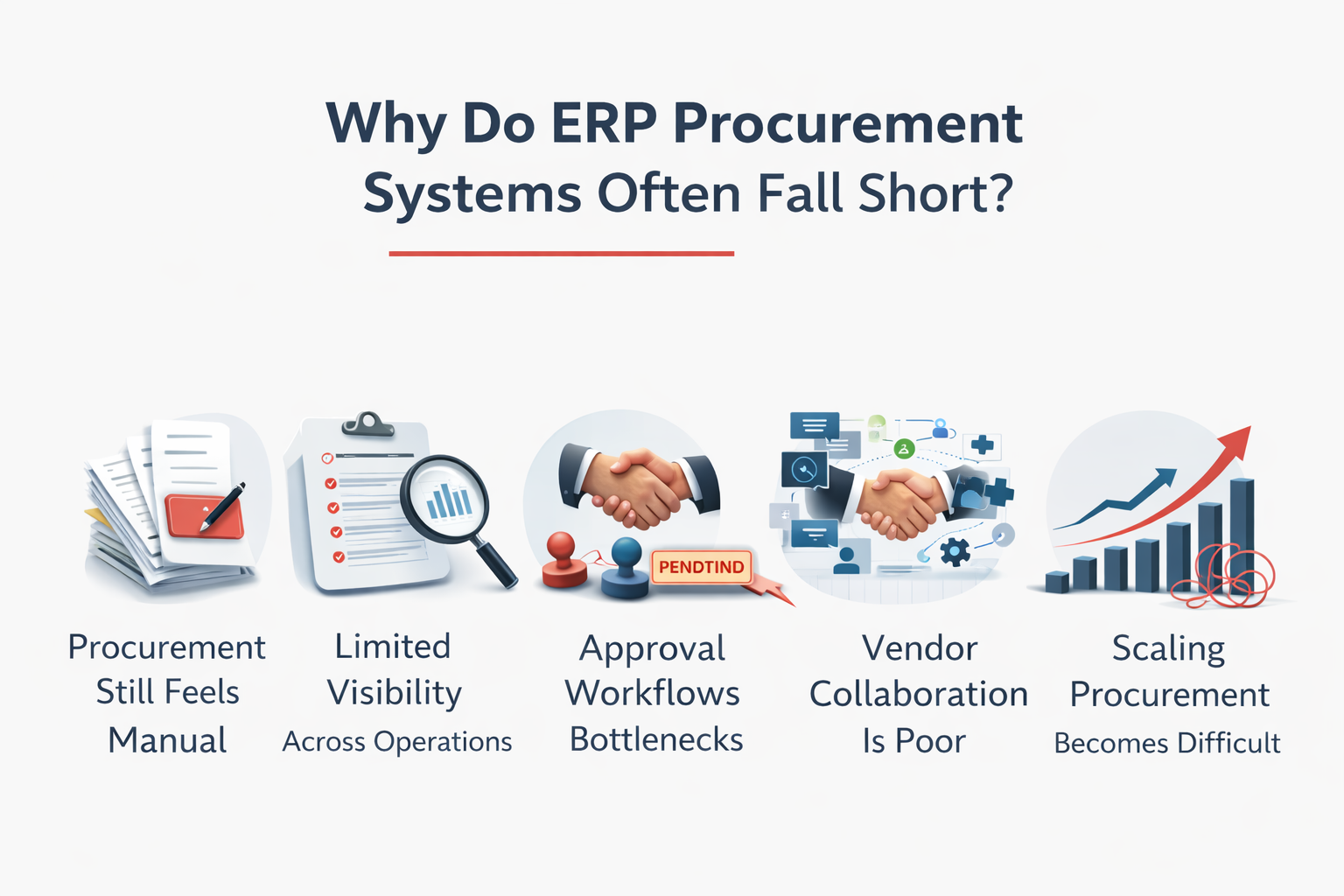
1. Procurement Still Feels Manual
Even with an ERP in place, procurement teams often spend hours on tasks like:
• Following up for approvals
• Comparing vendor quotes manually
• Managing supplier communication outside the system
• Tracking purchase requests through email
Instead of reducing effort, the ERP sometimes becomes just another place to log transactions.
The work still happens elsewhere.
2. Limited Visibility Across Procurement Operations
ERP procurement modules typically focus on transactions rather than insights.
Teams often struggle to answer questions like:
• Which vendors offer the best pricing trends?
• Where are procurement delays happening?
• Which departments are overspending?
• What demand patterns are emerging?
Without clear visibility, procurement becomes reactive rather than strategic.
3. Approval Workflows Become Bottlenecks
Procurement often involves multiple layers of approval. In many ERP systems, these workflows are rigid and difficult to modify.
That leads to situations like:
• Purchase requests stuck in approval queues
• Urgent orders delayed
• Managers approving requests without full context
The result is slower purchasing and frustrated teams.
4. Vendor Collaboration Is Poor
Suppliers are essential partners in procurement, yet many ERP systems treat them like static records rather than active participants.
Communication with vendors often happens through:
• Emails
• Phone calls
• Shared spreadsheets
Which creates a disconnect between the ERP system and real procurement activity.
5. Scaling Procurement Becomes Difficult
As companies grow, procurement complexity grows too:
• More vendors
• More product categories
• Multiple warehouses
• Global sourcing
Traditional ERP procurement modules struggle to adapt quickly to these changes. Customization becomes expensive and time-consuming.
What Modern Procurement Teams Actually Need
Procurement today is no longer just about placing purchase orders.
It is about speed, visibility, and smarter decision-making.
Modern procurement teams need systems that provide:
• Automated purchase workflows
• Real-time vendor comparison
• Smart demand planning
• Clear spending visibility
• Faster approvals
• Seamless vendor communication
So What’s the Alternative to Traditional ERP Procurement?
The alternative is specialized procurement platforms that work alongside ERP systems rather than replacing them.
These solutions extend ERP procurement capabilities while keeping financial data connected to the core ERP.
Instead of forcing procurement teams to work inside rigid ERP modules, modern procurement platforms focus on operational efficiency and decision support.
They automate purchasing workflows, centralize supplier communication, and provide real-time analytics.
One example is advanced purchase management software, which acts as a smarter operational layer for procurement teams. You can see how this works in practice through a platform Supplymint purchase order management software tool.
These tools integrate with ERP systems while transforming how procurement actually operates day to day.
How Procurement Platforms Improve ERP Procurement
Let’s look at how modern procurement systems solve the problems ERP modules struggle with.
Automated Procurement Workflows
Purchase requests can move through approvals automatically based on rules such as:
• Department budgets
• Purchase value thresholds
• Vendor categories
That removes the need for constant follow-ups.
Approvals happen faster, and procurement teams regain time for strategic work.
Smarter Vendor Management
Modern procurement platforms centralize vendor data and communication in one place.
Teams can track:
• Supplier performance
• Pricing trends
• Delivery timelines
• Vendor reliability
Instead of guessing which supplier to choose, procurement teams can make informed decisions.
Real-Time Procurement Visibility
Advanced procurement platforms give leaders instant visibility into:
• Spending patterns
• Department procurement activity
• Supplier performance
• Purchase cycle times
This helps organizations move from reactive purchasing to proactive planning.
Faster Decision-Making
With better data and automation, procurement teams spend less time managing processes and more time optimizing procurement strategy.
That can lead to:
• Lower purchasing costs
• Faster sourcing decisions
• Better supplier relationships
Is ERP Procurement Still Important?
Yes. ERP systems remain essential for financial tracking and enterprise-wide data management.
But ERP procurement alone is rarely enough for companies dealing with complex supply chains or rapid growth.
Think of ERP as the financial backbone of the organization.
Procurement platforms act as the operational engine that makes purchasing faster, smarter, and more efficient.
When the two systems work together, companies gain the best of both worlds.
Frequently Asked Questions
What is ERP procurement in simple terms?
ERP procurement refers to the purchasing functions built into an Enterprise Resource Planning system. It helps companies manage purchase orders, suppliers, approvals, and procurement records within a centralized platform.
Why do companies struggle with ERP procurement?
Many ERP systems were built for financial transaction tracking rather than modern procurement workflows. As a result, companies still rely on manual processes, disconnected tools, and slow approval systems.
Can procurement platforms replace ERP systems?
No. Most procurement platforms are designed to integrate with ERP systems rather than replace them. They improve operational procurement processes while ERP continues managing financial and accounting data.
Who benefits most from advanced procurement platforms?
Organizations with growing procurement complexity benefit the most, including:
• Retail companies
• Manufacturing businesses
• Supply chain-driven companies
• Multi-location enterprises
These companies need better visibility, automation, and supplier management.
The Future of Procurement Is Smarter, Not Harder
Procurement teams today are expected to do much more than process purchase orders. They are responsible for managing supplier relationships, controlling costs, and supporting business growth.
When ERP procurement systems fall short, it doesn’t mean ERP has failed. It simply means procurement has evolved.
Modern organizations are combining ERP systems with specialized procurement platforms that automate workflows, provide real-time insights, and simplify supplier collaboration.
The result is faster purchasing, better decisions, and stronger supply chains.
Ready to Upgrade Your Procurement Process?
If your procurement team still spends hours chasing approvals, comparing vendor quotes, or tracking purchases across multiple systems, it might be time to rethink how procurement works in your organization.
Modern procurement platforms can extend your ERP capabilities and transform how purchasing decisions are made.
To see how a smarter procurement system works in practice, take a look at this purchase management solution.