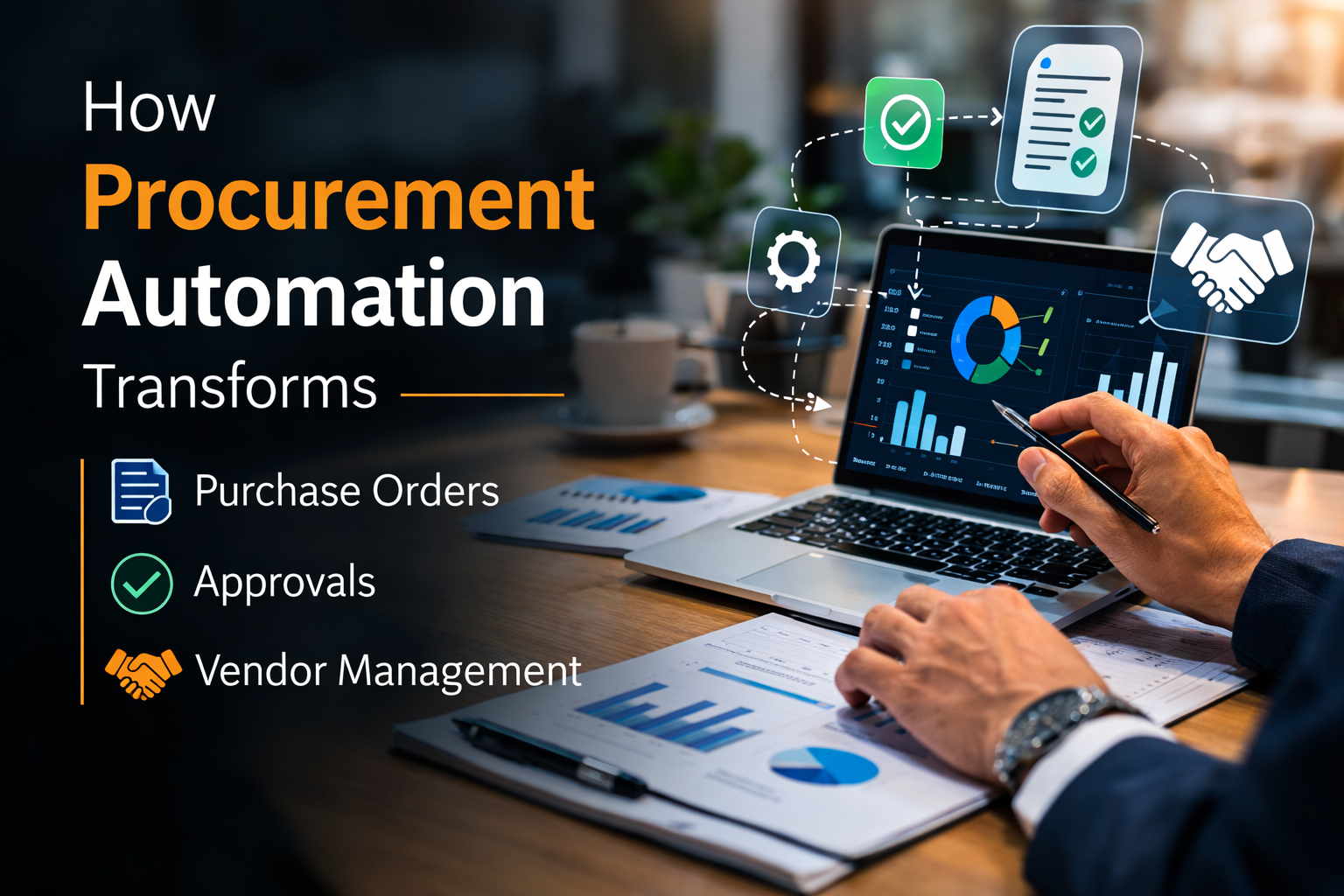
In today’s fast-paced business environment, the need for efficiency and accuracy has never been more critical. Procurement processes, ranging from purchase orders and approvals to vendor management, are often complicated, manual, and prone to error. As businesses scale, these processes can become bottlenecks, leading to delays, missed opportunities, and frustration for both internal teams and external partners.
But what if there was a way to eliminate the inefficiencies and improve procurement accuracy? That’s where procurement automation comes into play. This game-changing technology is revolutionizing the way businesses manage their purchasing systems, providing an end-to-end solution that enhances workflow, reduces costs, and increases overall productivity.
In this article, we’ll explore how procurement automation is transforming key areas of procurement, including purchase orders, approvals, and vendor management. We’ll look at the benefits, the challenges it solves, and how automation is paving the way for smoother, more efficient business operations.
What Is Procurement Automation?
Before diving into its specific benefits, it’s important to understand what procurement automation actually is. In simple terms, procurement automation refers to the use of technology and software to automate procurement processes. This includes everything from creating and approving purchase orders, managing purchase requisitions, and overseeing vendor management.
Automation in procurement helps streamline manual tasks, ensures compliance, reduces errors, and improves the speed and accuracy of decision-making. By integrating purchase order automation, purchase requisition automation, and vendor management automation, businesses can build a more resilient and agile procurement process.
Why is Procurement Automation Important?
The importance of automating procurement cannot be overstated. Manual procurement processes are time-consuming, error-prone, and often lead to delays in obtaining goods or services. For instance, manual purchase order creation might lead to errors in quantities, pricing, or vendor selection, causing costly mistakes that could have been avoided with an automated system.
Additionally, manual approval workflows slow down the process. This creates unnecessary bottlenecks, which can significantly impact the speed of operations, especially in industries where time is of the essence.
By automating these processes, businesses can:
• Increase operational efficiency: Streamlined processes allow for faster decision-making and reduced manual intervention.
• Improve accuracy: Automation minimizes human error, ensuring the right products, services, and prices are chosen.
• Enhance compliance: Automated workflows ensure that every step complies with company policies, budgets, and external regulations.
• Boost collaboration: With automated systems, teams can easily communicate, track progress, and share relevant information.
Procurement automation provides a solution to these challenges, ultimately making the procurement process faster, smarter, and more reliable.
How Does Procurement Automation Transform Purchase Orders?
What Is Purchase Order Automation?
Purchase order automation refers to the process of automatically generating and managing purchase orders (POs) within the procurement system. Traditionally, creating POs involved manual data entry, multiple emails, and a lot of back-and-forth communication between departments. This manual process not only takes time but can also lead to errors.
With purchase order automation, the entire process is streamlined. The system automatically generates purchase orders based on preset criteria, sending them directly to suppliers or vendors for approval. This eliminates the need for human intervention in creating and tracking POs.
Benefits of Purchase Order Automation
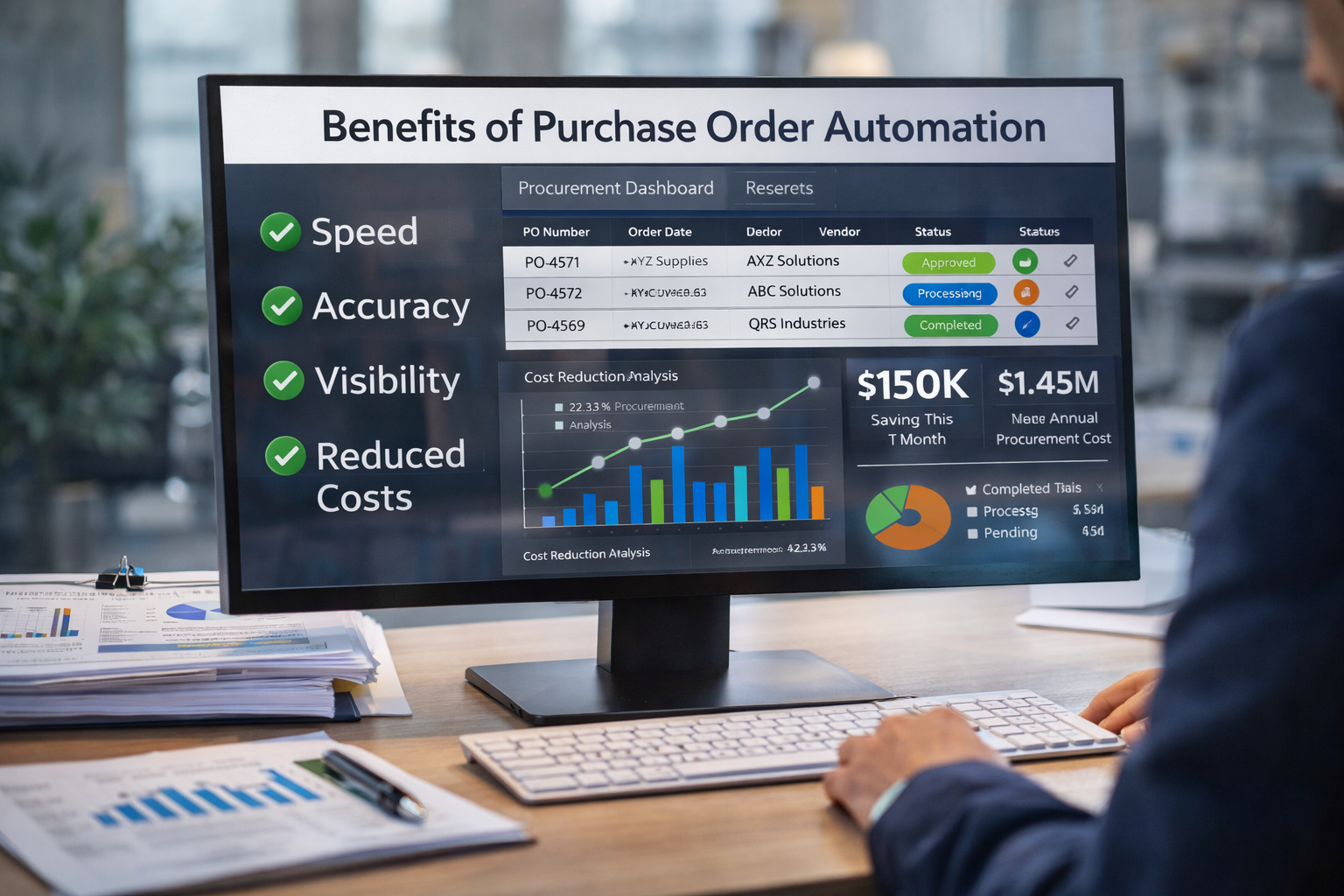
• Speed: Purchase order automation speeds up the entire procurement cycle by reducing the time spent manually creating, reviewing, and approving orders.
• Accuracy: By eliminating human error, automated purchase orders ensure accurate quantities, prices, and supplier details, reducing the chances of costly mistakes.
• Visibility: Automated systems provide real-time visibility into the status of purchase orders, so everyone from procurement officers to suppliers can track progress easily.
• Reduced Costs: By improving efficiency and accuracy, businesses can reduce overhead costs associated with manual PO management.
How Can You Automate Supplier Management?
Supplier management is a critical aspect of procurement, but it can also be one of the most challenging. Keeping track of supplier performance, communication, and contract compliance requires a lot of attention to detail. Automating supplier management helps streamline this process, ensuring that businesses can maintain good relationships with suppliers while minimizing risk and inefficiency.
With automation, key activities such as contract management, performance evaluations, and communication are handled seamlessly. Automated systems also store historical supplier data, helping businesses make data-driven decisions when selecting suppliers or renegotiating contracts.
Benefits of Automating Supplier Management
• Improved Supplier Relationships: Automation helps track performance and compliance, which can foster better supplier relationships.
• Reduced Risk: With real-time data on supplier performance, businesses can quickly identify and resolve potential risks.
• Better Decision-Making: By having access to accurate, historical data, businesses can make informed decisions about which suppliers offer the best value.
By automating supplier management, procurement teams can ensure smooth supplier relationships and make better, more informed decisions.
How Does Procurement Automation Improve Purchase Requisitions?
What Is Purchase Requisition Automation?
Purchase requisition automation refers to the process of automating the creation and approval of purchase requisitions. In a traditional procurement process, employees or departments create requisitions manually and then submit them for approval. This process can take time and lead to confusion, especially when there are multiple approvers.
With purchase requisition automation, the entire process is simplified. Employees can request purchases directly through the system, which then routes the requisition through predefined approval workflows. Once approved, the system automatically generates a purchase order.
Benefits of Purchase Requisition Automation
• Efficiency: Automated systems eliminate the need for manual requisition entry and approval, speeding up the entire process.
• Transparency: Both requisitioners and approvers can track the status of the requisition in real-time, reducing communication errors and misunderstandings.
• Better Control: Automation enforces purchasing policies and approval workflows, ensuring that all purchases are aligned with the company’s budget and strategy.
How Vendor Management Automation Makes Procurement Easier
What Is Vendor Management Automation?
Vendor management automation is the process of using technology to automate the entire lifecycle of vendor relationships. From onboarding and contract management to performance monitoring and payment processing, automation can simplify and improve vendor management in several key areas.
Vendor management automation ensures that businesses are consistently following best practices in managing vendor relationships. With automated workflows, companies can reduce the chances of human error, ensure compliance with contracts, and make better-informed decisions when selecting or evaluating suppliers.
Benefits of Vendor Management Automation
• Consistency: Automation ensures that vendor processes are followed consistently across the board, reducing mistakes and misunderstandings.
• Improved Communication: Automated notifications and reminders ensure that vendors are kept in the loop, resulting in smoother interactions and fewer delays.
• Better Vendor Performance Tracking: Automation allows businesses to track and evaluate vendor performance in real-time, helping procurement teams make more informed decisions.
Final Words
Procurement automation is transforming how businesses manage their purchasing, approvals, and vendor relationships. By automating key processes like purchase orders, requisitions, and supplier management, companies can improve efficiency, reduce costs, and enhance overall procurement performance. Ready to streamline your procurement processes? Learn more about how Supplymint’s procurement management software can help automate and optimize your procurement system.
Frequently Asked Questions
How Does Procurement Automation Save Money?
Procurement automation saves money by reducing manual labor, minimizing errors, and improving supplier negotiations. Automation speeds up procurement cycles, ensuring quicker deliveries and reducing the risk of costly mistakes.
Can Procurement Automation Integrate with Existing Systems?
Yes, most procurement automation platforms integrate seamlessly with existing Enterprise Resource Planning (ERP) systems and other business software. This ensures that the transition to automation is smooth and that data flows consistently across platforms.
What’s the First Step in Automating Procurement?
The first step is identifying the processes that could benefit most from automation, such as purchase order creation, vendor management, or purchase requisitions. After that, businesses can select a procurement automation solution tailored to their needs.