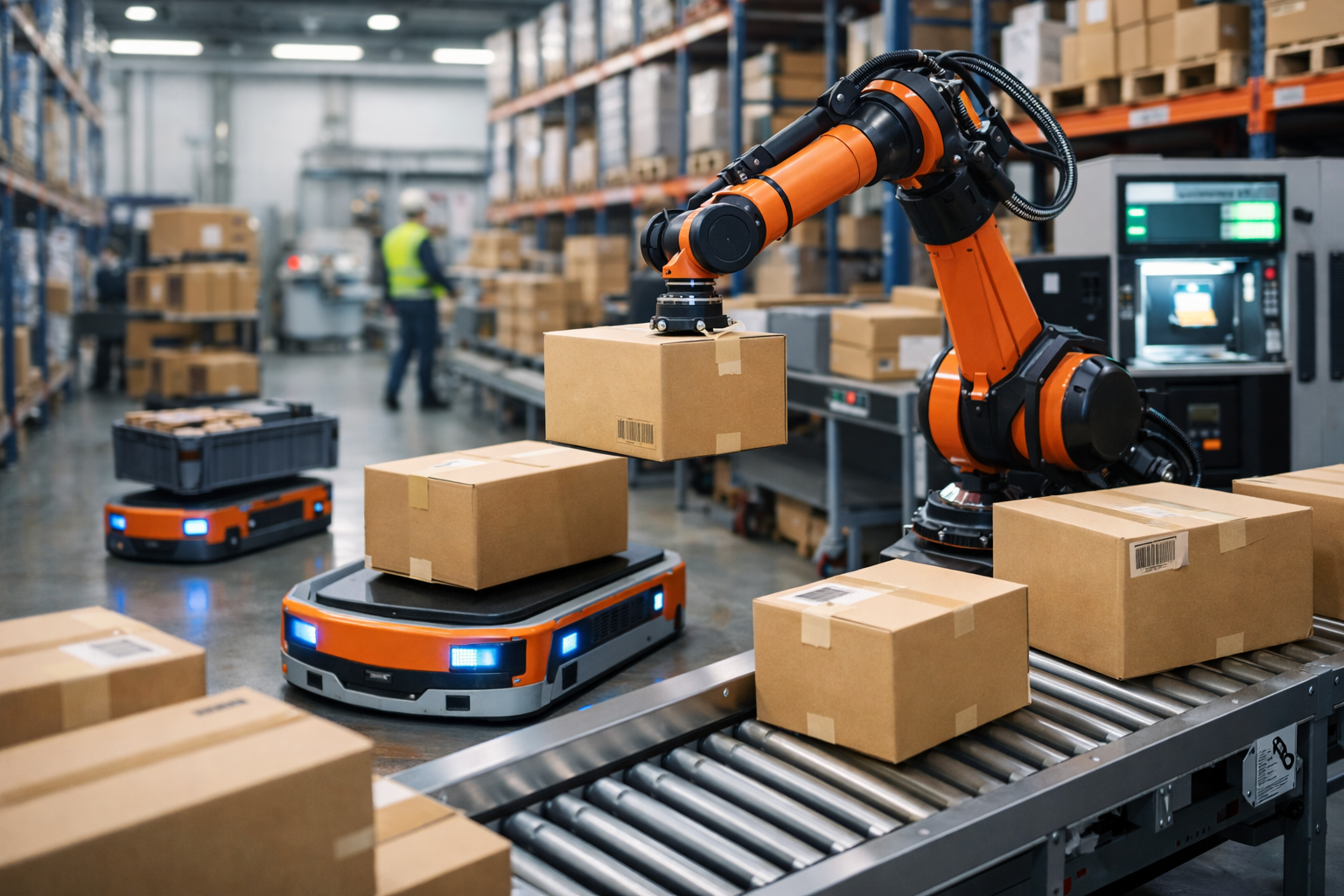
Warehouse automation systems are transforming the way warehouses operate, integrating advanced technology to streamline processes like inventory management, order fulfillment, and material handling. As supply chains and logistics evolve, automation has become essential for businesses aiming to stay competitive.
By minimizing manual labor, reducing human error, and optimizing workflow, these systems improve accuracy and significantly cut operational costs. With solutions like automated storage, picking robots, and real-time inventory tracking, warehouse automation helps businesses enhance efficiency, minimize downtime, and boost profitability. As e-commerce and global trade continue to expand, the role of automation in modern warehouses has never been more critical.
What Are Warehouse Automation Systems?
Warehouse automation systems are integrated technologies that streamline and optimize warehouse operations, reducing the need for manual intervention. These systems rely on advanced tools and machinery, such as software, robotic arms, conveyors, and automated guided vehicles (AGVs), to perform tasks like sorting, picking, packing, and inventory management.
Several types of systems contribute to automation in warehouses:
1. Automated Storage and Retrieval Systems (AS/RS): These systems use robots to store and retrieve items from racks, improving space efficiency and minimizing human error.
2. Picking Robots: Robots that automatically pick items from shelves and deliver them to packing stations, speeding up order fulfillment.
3. Automated Material Handling Systems: Conveyors, sorters, and AGVs transport goods throughout the warehouse, reducing manual labor and increasing speed.
Benefits of Warehouse Automation Systems
1. Improved Accuracy in Inventory Management
One of the key benefits of warehouse automation is its ability to significantly reduce human errors in inventory tracking. Manual inventory management often involves labor-intensive tasks like counting stock and updating records, which can lead to inaccuracies. Automation eliminates these risks by using real-time data and AI-powered systems to ensure precise stock tracking.
Systems like RFID tags and barcode scanners enable instant and accurate tracking of inventory, allowing businesses to monitor stock levels without manual counting. With automated inventory management, data is continuously updated, providing real-time insights into product availability and reducing discrepancies. AI algorithms can even predict when stock will run low, ensuring timely reordering and preventing stockouts. This level of precision enhances inventory control and minimizes costly errors, ultimately leading to more efficient warehouse operations
2. Speed and Efficiency in Order Fulfillment
Warehouse automation greatly accelerates the picking and packing process, enabling faster order fulfillment with minimal errors. Automated systems streamline these processes by using robotic arms, conveyors, and sorting systems that work seamlessly together. Robots are used to quickly and accurately pick products from shelves, reducing the time spent by human workers in searching for items.
For instance, robotic picking systems can fetch products at high speed, ensuring that orders are filled faster and with higher accuracy. Conveyor systems then transport these items to packing stations, minimizing manual handling and speeding up the overall process. By automating these key tasks, warehouses can fulfill orders much faster, meet customer expectations for rapid delivery, and maintain precision without sacrificing efficiency. This increase in speed and efficiency allows businesses to scale operations without adding extra labor costs.
3. Cost Reduction Through Labor Efficiency
Warehouse automation systems help cut labor costs by reducing the amount of manual work needed for daily operations. Tasks like picking, sorting, scanning, and moving goods usually take a lot of time and manpower. When these are automated, you can run the same workload with fewer people, while also improving output consistency.
Automation also reduces the dependence on temporary workers during peak seasons. Instead of quickly hiring, training, and managing short-term staff, automated systems can handle higher volumes with less disruption.
For example, warehouse robots can take over repetitive tasks like sorting cartons or picking fast-moving items. That frees your team to focus on higher-value work like exception handling, quality checks, inventory audits, and process improvements.
4. Reduced Operational Errors and Downtime
Automation systems cut down costly warehouse mistakes by standardizing how work gets done. When picking, put-away, and stock updates depend on manual steps, errors like misplaced items, wrong shipments, and inventory mismatches happen more often. Automated workflows reduce these slip-ups by guiding each move with system rules, scans, and verified locations.
They also help reduce downtime by spotting small issues early. Sensors and system alerts can flag problems like conveyor slowdowns, blocked lanes, or repeated scan failures before they turn into bigger disruptions.
For example, automated systems can detect when a product is stored in the wrong bin or when a conveyor path is blocked. That triggers quick alerts, so the team fixes it fast and keeps fulfillment moving.
5. Space Optimization and Warehouse Layout Efficiency
Warehouse automation helps you store more inventory in the same footprint by using space smarter, both vertically and across the floor. Instead of wide aisles and scattered bins, automated setups use tighter layouts, faster access paths, and organized storage zones that reduce wasted gaps.
Automated racking systems and dynamic shelving also improve storage density. Items can be placed based on demand, size, and picking frequency, so fast-moving products stay closer to picking stations while slow movers shift to higher or deeper slots. This improves flow and reduces travel time inside the warehouse.
A good example is Vertical Lift Modules (VLMs). They store items in vertical trays and bring them to the operator automatically, which can cut down floor space usage while improving access and accuracy.
6. Improved Data Analytics for Decision Making
Warehouse automation systems offer valuable insights by collecting and analyzing vast amounts of operational data. This data helps businesses make informed decisions to enhance efficiency and optimize their processes.
• Real-time insights: Automated systems provide up-to-the-minute data on inventory, order status, and warehouse performance.
• Better demand forecasting: Accurate data analysis helps predict demand spikes and plan stock levels accordingly, reducing the chances of stockouts or overstocking.
• Inventory planning: Automation systems track inventory trends, allowing businesses to better allocate resources and maintain ideal stock levels.
Example: AI-powered systems can predict stock shortages based on historical sales data and seasonal trends, ensuring that inventory levels are always optimal, preventing both overstocking and stockouts.
7. Scalability and Flexibility
One of the key advantages of warehouse automation is its ability to easily scale up or down to match changing demand. As businesses grow or face fluctuating market conditions, automation systems can be adjusted to handle the increased or decreased workload efficiently.
• Scalability: Automation systems can handle varying volumes of orders, allowing warehouses to scale operations without adding significant labor costs. As demand rises, automated systems can manage more tasks with minimal human intervention.
• Flexibility: These systems are designed to adapt to seasonal changes, product type variations, or shifts in warehouse operations. Whether it’s preparing for a peak season or adjusting to new product lines, automation systems can be reconfigured with minimal downtime.
Final Words
Warehouse automation systems, like Digiproc, can significantly improve accuracy, streamline workflows, and reduce operational costs. By automating procurement tasks such as PO tracking and vendor management, businesses can reduce human errors, speed up decision-making, and maintain better control over their operations. This is especially important in today’s fast-paced and competitive market.
If you’re looking to optimize your procurement process and increase efficiency, explore Digiproc to see how it can transform your business operations. Reach out for a personalized consultation and let us help you streamline your supply chain.
Frequently Asked Questions
1) How do I know if my warehouse is ready for automation?
If you’re seeing frequent picking errors, stock mismatches, delayed dispatch, or rising labor costs, you’re likely ready. A quick workflow audit will show where automation will give the biggest impact.
2) What should I automate first in a warehouse?
Start with the most repetitive and time-consuming work. For many warehouses, that’s picking, put-away, and internal movement of goods.
3) Do I need to rebuild my entire warehouse to automate it?
No. Most businesses begin with one section or one workflow and expand step by step. You can automate in phases without changing everything at once.
4) How long does it take to implement warehouse automation?
It varies. Software and scanning tools can be set up quickly, while robotics or automated storage may take longer due to layout planning, installation, and testing.
5) What kind of training will my staff need?
Most teams only need basic training to use handheld devices, dashboards, and system prompts. For robotics or advanced systems, a few staff members may need deeper operational training.
6) Can warehouse automation work with my current ERP or inventory software?
In most cases, yes. Many platforms integrate through APIs or connectors. It’s best to confirm integrations early so data stays consistent across systems.
7) What are the common mistakes businesses make when automating?
Trying to automate everything at once, choosing tools without mapping the workflow, and ignoring change management. Starting small and measuring results usually works better.
8) How do I estimate ROI before investing?
Track your current costs: labor hours, error returns, overtime, delayed orders, and space usage. Then compare it with expected automation improvements to get a realistic ROI view.