
Every business depends on smooth daily operations. Orders need to reach customers on time. Inventory must stay under control. Suppliers expect payments without delay. When manual tasks increase, teams feel pressure and mistakes happen. That is why many companies are now paying attention to supply chain automation trends. They want better speed, fewer errors, and clear data they can rely on. In 2026, businesses across the United States, including Texas, California, and New York, are using digital systems to handle purchasing and shipping. This blog explores the future of supply chain automation, highlights real-world use cases, and explains how supply chain automation solutions are shaping logistics and procurement this year.
What Is Supply Chain Automation?
Supply chain work covers buying, storing, moving, and selling goods. Many tasks used to be manual. Staff entered data. They checked invoices. They tracked trucks by phone.
Automation changes this process.
It uses software and digital tools to handle tasks without manual input. Systems talk to each other. Data flows in real time. Teams get alerts when something needs action.
In simple words, automation lets machines handle repeat work so people can focus on smart decisions.
Why Are Businesses Focusing on Supply Chain Automation Trends in 2026?
Companies want faster results. Customers expect quick delivery. Vendors expect clear payment cycles. Delays hurt trust.
In 2026, these reasons drive change:
• High shipping demand
• Rising labor costs
• Need for real-time tracking
• Pressure to reduce waste
• Growth in online buying
In places like Dallas, Los Angeles, and Chicago, warehouses now depend on smart systems. Local distributors in Texas also use digital dashboards to track orders daily.
Businesses see clear value. Automation cuts delays. It lowers human errors. It improves order accuracy.
How Does Automation in Procurement Work?
Procurement means buying goods or services for business use. Manual buying takes time. Emails move back and forth. Approvals slow the process.
Step-by-step flow of automation in procurement:
1. System detects low stock.
2. It sends a purchase request.
3. Approval flows through digital rules.
4. Vendor receives order.
5. Invoice matches automatically.
6. Payment clears without delay.
This process removes long email chains. It reduces invoice mismatch. It keeps records clean.
Many mid-size companies in Texas now use digital approval systems to manage vendor payments. They report fewer disputes and faster order cycles.
Top Supply Chain Automation Trends in 2026
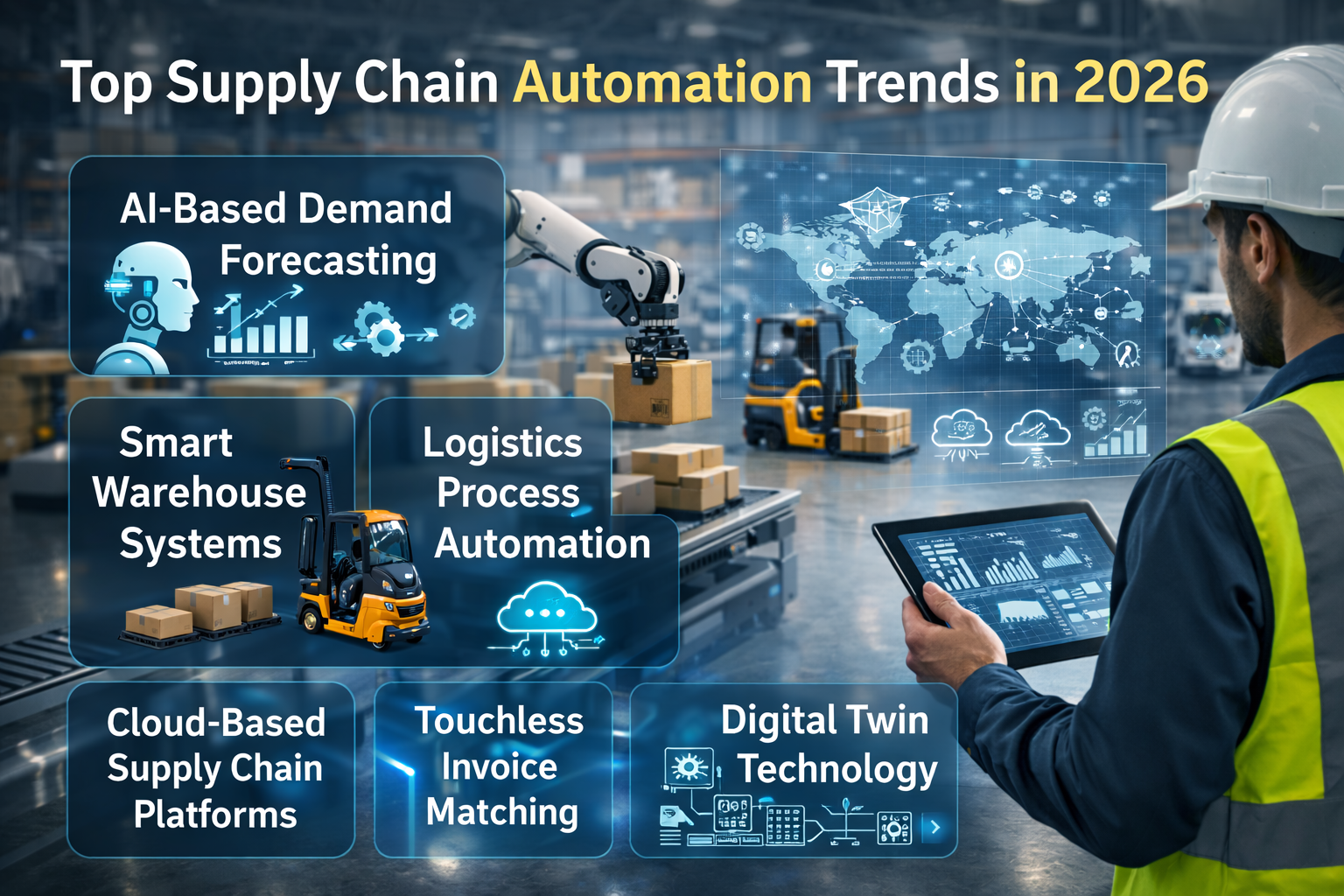
The future of supply chain automation looks strong. Let us look at major trends shaping this year.
1. AI-Based Demand Forecasting
Businesses want to know what customers will buy next month. AI tools study past sales. They track market shifts. They predict demand.
This helps:
• Reduce overstock
• Avoid stock-outs
• Plan production better
Retail chains across the United States use AI dashboards to adjust orders weekly.
2. Smart Warehouse Systems
Warehouses now use robots for picking and packing. Sensors track item movement. Dashboards show stock levels live.
Smart warehouse benefits:
• Faster order processing
• Fewer packing errors
• Lower labor strain
• Clear stock tracking
Large fulfillment centers in California rely on robotic pick systems to handle high daily order volumes.
3. Logistics Process Automation
Shipping used to depend on manual updates. Now systems track trucks through GPS. They update delivery times. They send alerts if delays occur.
Logistics process automation helps companies:
• Plan best delivery routes
• Reduce fuel waste
• Track shipment live
• Improve customer updates
Distribution hubs in Houston use route planning software to cut delivery time.
4. Cloud-Based Supply Chain Platforms
Cloud tools connect vendors, warehouses, and finance teams in one system.
Benefits include:
• Shared data access
• Secure storage
• Real-time reporting
• Easy scaling
Companies with multiple branches across states use cloud dashboards to stay aligned.
5. Touchless Invoice Matching
Manual invoice checks take hours. Automation matches purchase orders, goods receipts, and invoices instantly.
This cuts fraud risk. It speeds up payment. It improves vendor trust.
6. Digital Twin Technology
A digital twin is a virtual copy of a supply chain network. Businesses test changes in this model before applying them in real life.
For example:
• Testing new shipping routes
• Studying warehouse layout changes
• Predicting cost impact
This reduces risk before real-world action.
What Are Supply Chain Automation Solutions Available in 2026?
Companies can choose different tools based on their size.
Common solutions include:
• ERP systems with automation modules
• Warehouse Management Systems (WMS)
• Transportation Management Systems (TMS)
• Procurement software
• Vendor management portals
These supply chain automation solutions help manage buying, shipping, billing, and tracking in one flow.
Small businesses in Texas now adopt modular tools. They start with procurement automation. Later, they expand to warehouse tracking.
How Does Automation Reduce Errors?
Errors cost money. Wrong orders hurt brand trust.
Automation helps by:
• Removing manual data entry
• Setting rule-based approvals
• Sending alerts for mismatches
• Tracking real-time data
When systems check data automatically, mistakes drop.
What Is the Role of Data in the Future of Supply Chain Automation?
Data drives every decision.
Automation systems collect:
• Sales history
• Vendor performance
• Delivery timelines
• Payment records
Leaders use this data to:
• Improve vendor selection
• Plan production
• Adjust pricing
• Manage risk
The future of supply chain automation depends on smart data use.
How Are U.S. Companies Adapting in 2026?
Across the United States, change is clear.
• Texas logistics firms use route planning systems.
• California tech companies build AI supply tools.
• New York retailers use digital inventory tracking.
Even local distributors in Houston adopt smart dashboards. They track supplier lead time. They manage warehouse stock daily.
Regional growth pushes digital upgrades.
Why Should Businesses Invest in Automation Now?
Waiting creates delay. Delay costs revenue.
Benefits of early adoption:
• Faster order cycle
• Lower admin cost
• Better customer service
• Strong vendor ties
• Clear audit trail
Companies that follow supply chain automation trends stay ahead in 2026.
What Challenges Do Businesses Face?
Automation needs planning.
Common hurdles:
• System setup cost
• Staff training
• Data migration
• Vendor alignment
However, once systems run smoothly, savings cover setup costs.
How to Start Supply Chain Automation?
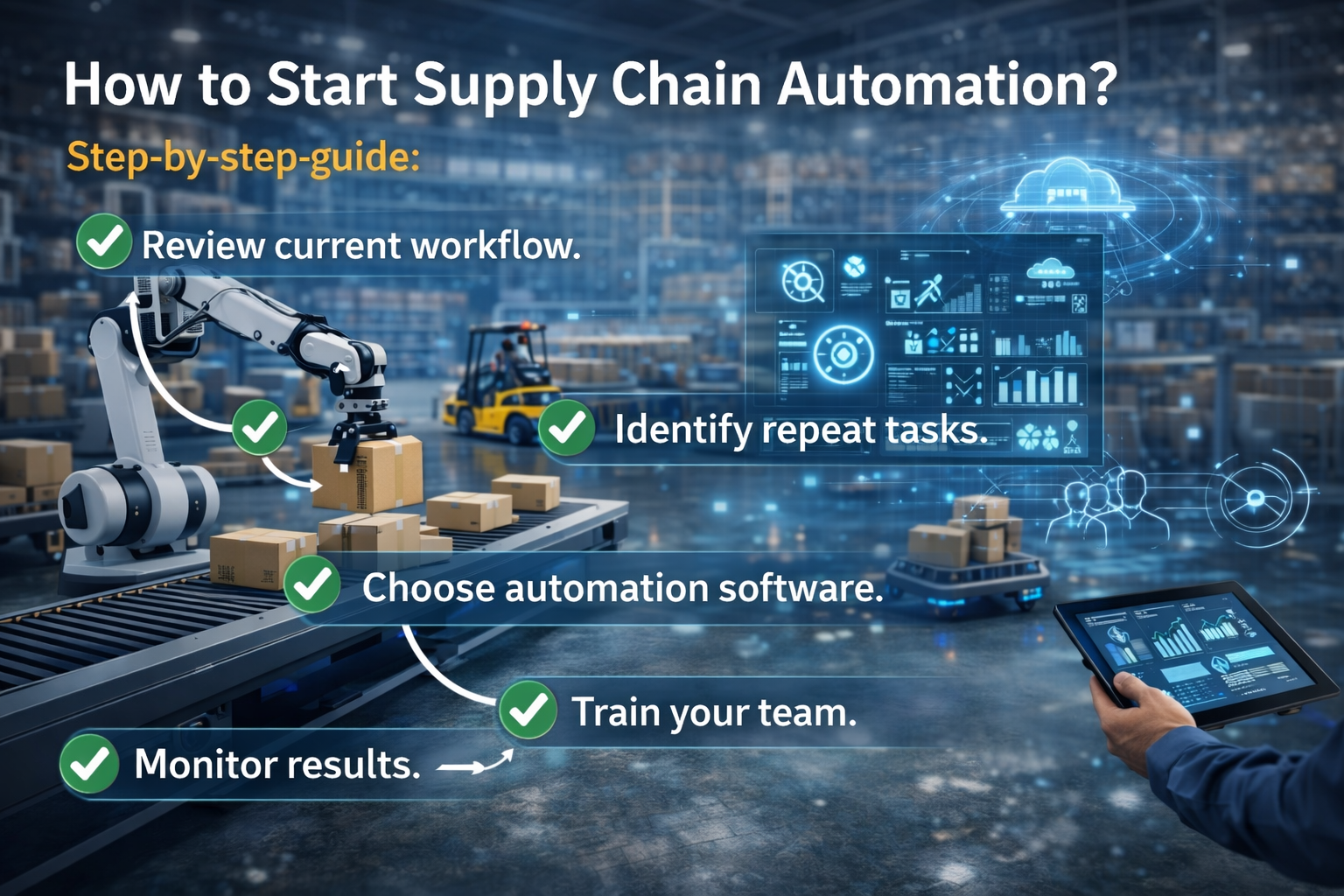
Start small. Focus on one area.
Step-by-step guide:
1. Review current workflow.
2. Identify repeat tasks.
3. Choose automation software.
4. Train your team.
5. Monitor results.
Growth becomes steady when change happens in phases.
How Does Automation Improve Vendor Relationships?
Vendors want clarity.
Automation provides:
• Timely payments
• Clear order tracking
• Shared dashboards
• Performance reports
This builds trust and long-term ties.
Is Automation Only for Large Companies?
No.
Small and mid-size firms benefit too. Many cloud tools offer flexible pricing. Companies in Texas with under 50 staff now manage buying through automated systems.
Digital tools fit all sizes.
Final Words
Supply chains are changing fast. Businesses want speed. They want accuracy. They want control. The rise of AI technology, smart warehouses, and cloud-based systems indicates the future of supply chain automation and how it is developing the logistics and procurement industry in 2026. Businesses in Texas and other states in the U.S. are now relying on digital technology for their daily operations. Staying on top of supply chain automation trends can assist businesses in minimizing waste, enhancing relationships with suppliers, and maximizing profit. If your business wants to expand with smart and efficient supply chain automation solutions, it is high time to act.
To explore modern automation tools built for growing businesses, visit Supplymint and learn how structured systems can support your logistics and procurement journey.
FAQs
What is supply chain automation?
It uses software to manage buying, shipping, and tracking tasks without manual effort.
Why is automation important in procurement?
It speeds approvals, reduces invoice errors, and improves payment cycles.
How does logistics process automation help delivery?
It tracks routes, monitors shipments, and reduces delays.
Is automation costly for small businesses?
Many tools offer scalable pricing. Small firms can start with one module.
How does automation improve accuracy?
Systems check data in real time. This reduces manual entry errors.