Supplymint logo
usecase image

Easily Communicate Discrepancies & Initiate Returns to Suppliers

Procurement
Discrepancy
Shipments

Team Involved

Buyer

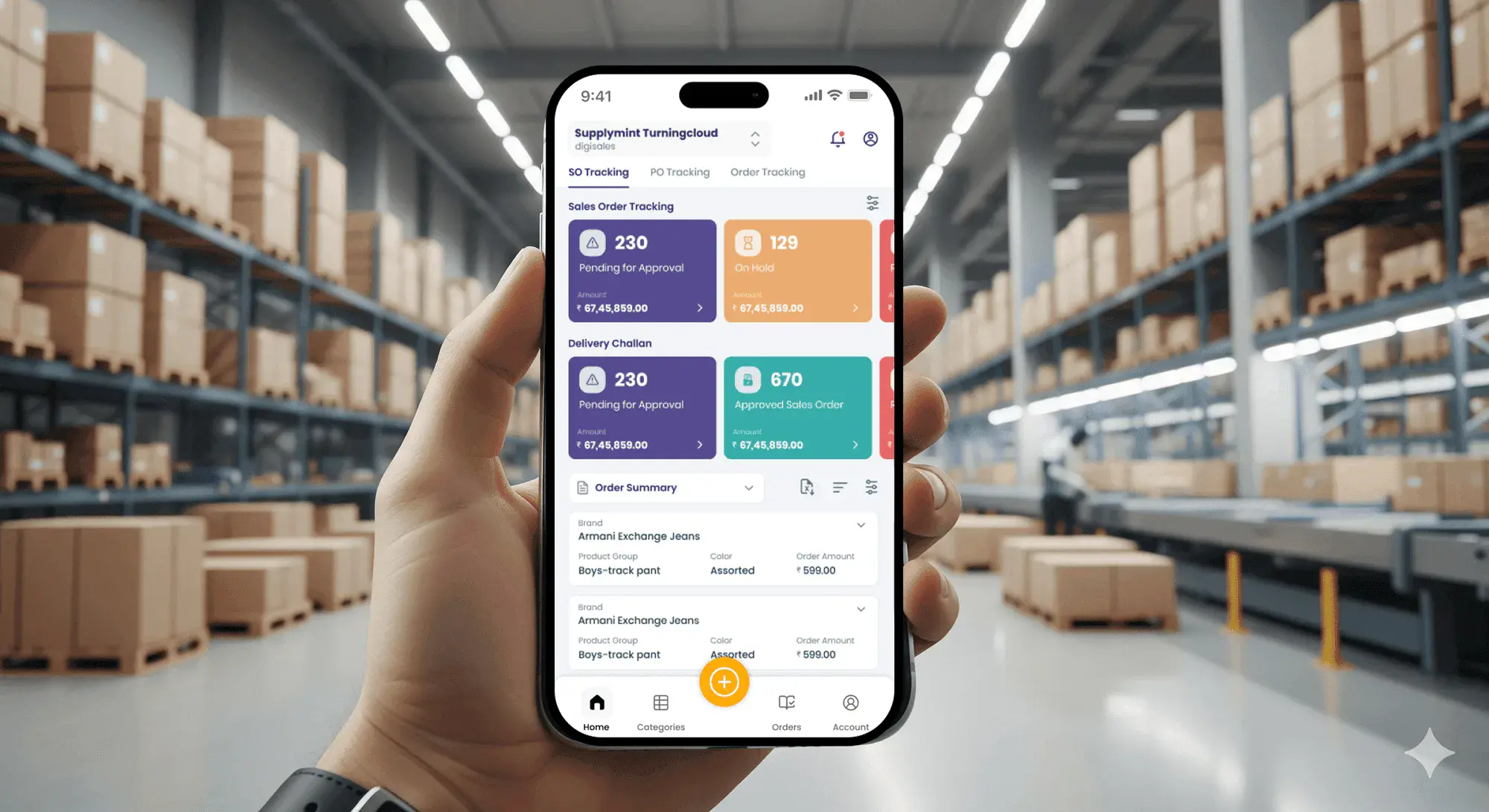
Responsible for reconciling received goods against purchase orders. Uses Source to Pay to log discrepancies, alert vendors, and track return progress, all from a centralized dashboard.

vendor

Vendor

Receives real-time alerts for shipment issues, views return requests with full context, and responds through the portal by confirming pickups, replacements, or issuing credit notes.

Workflow Mission

To help retail and D2C brands maintain inventory accuracy and avoid revenue leakage by enabling quick, structured handling of purchase order discrepancies. Source to Pay makes it easy to flag issues, communicate with vendors, and trigger return processes—without email chains or spreadsheet tracking

Workflow Mission

Scope

This use case resides within DigiProc’s post-delivery and goods receiving process. It enables buyers and ops teams to log discrepancies, collaborate with vendors, initiate return orders (ROs), and track progress via a unified interface synced to purchase orders and inventory data

Scope

Our Solution for Buyers & Retailers

Solution Architecture

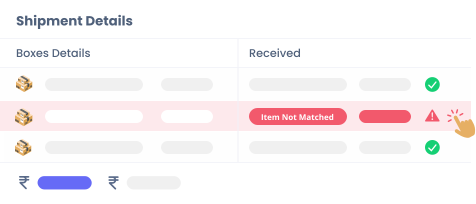
Instant Logging of Discrepancies at Delivery

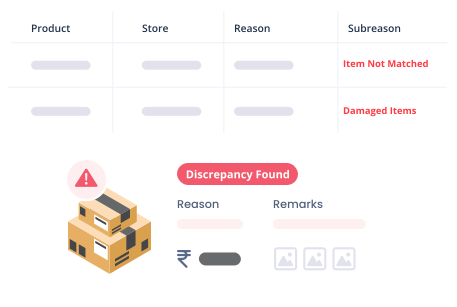
As goods arrive at a warehouse or store, operations teams can immediately record any issues, such as missing items, excess delivery, damaged goods, or quality mismatches. These are logged digitally, tagged with visual proof and notes, and automatically linked to the relevant PO. This enables teams to respond in real time and avoid gaps between receiving and reporting.

solution image

Automated Vendor Communication with Full Discrepancy Context

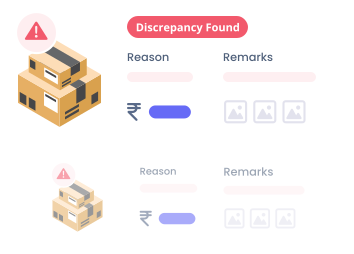
Once a discrepancy is logged, Source to Pay sends automated alerts to the vendor, including a breakdown of the issue, photos, GRN references, and remarks. This replaces lengthy follow-up emails with clear, structured communication, ensuring suppliers have everything they need to act promptly, reducing miscommunication and delays.

Initiate and Manage Return Orders from One Dashboard

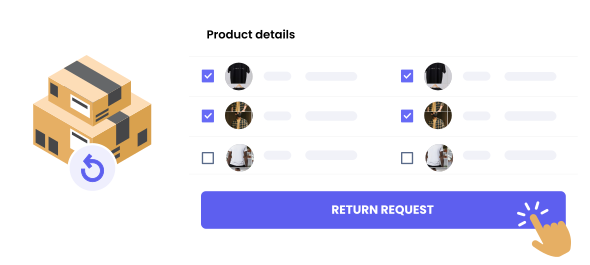
Buyers can raise a return request directly from the discrepancy entry. The return order includes product quantities, dispatch and delivery locations, reason codes, and supporting files. Once submitted, vendors are notified and can acknowledge or respond from their end, whether by scheduling a pickup, arranging a replacement, or issuing a credit note. All this happens through a single interface with full traceability.

End-to-End Return Tracking and Inventory Reconciliation

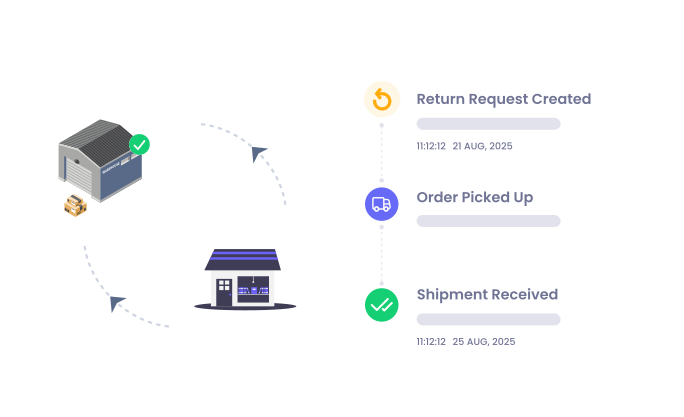
Every return request has a real-time status trail, pending pickup, in transit, and received, which allows buyers and ops teams to monitor the progress transparently. On successful receipt, inventory counts are auto-updated, and reconciliation is handled without spreadsheets or manual data entry.

Insights That Drive Better Vendor Performance

Source To Pay logs and summarizes all discrepancies by product, store, vendor, and reason. Over time, this creates a rich data layer buyers can use to improve sourcing decisions, strengthen SLAs, and reduce repeated errors, transforming what was once a manual firefight into a structured, data-backed process.

Key takeaway

This use case shows how Supplymint’s Source to Pay enables retail teams to handle delivery discrepancies and initiate returns with speed, clarity, and accountability. By shifting the entire process, capturing issues, alerting vendors, managing returns, and reconciling inventory, onto a single platform, businesses can eliminate manual errors, reduce delays, and ensure every mismatch is acted on without friction. With this workflow, you can:

Identify discrepancies in real-time at receiving points

Track patterns over time to improve vendor performance and supply quality

Automate every step of the return process for faster resolution

Get full visibility on return statuses from initiation to closure

Instantly notify suppliers with complete, structured context

Instead of chasing down issues across spreadsheets, emails, and calls, buyers and ops teams get a clear, digital process that strengthens vendor collaboration and protects product margins.