
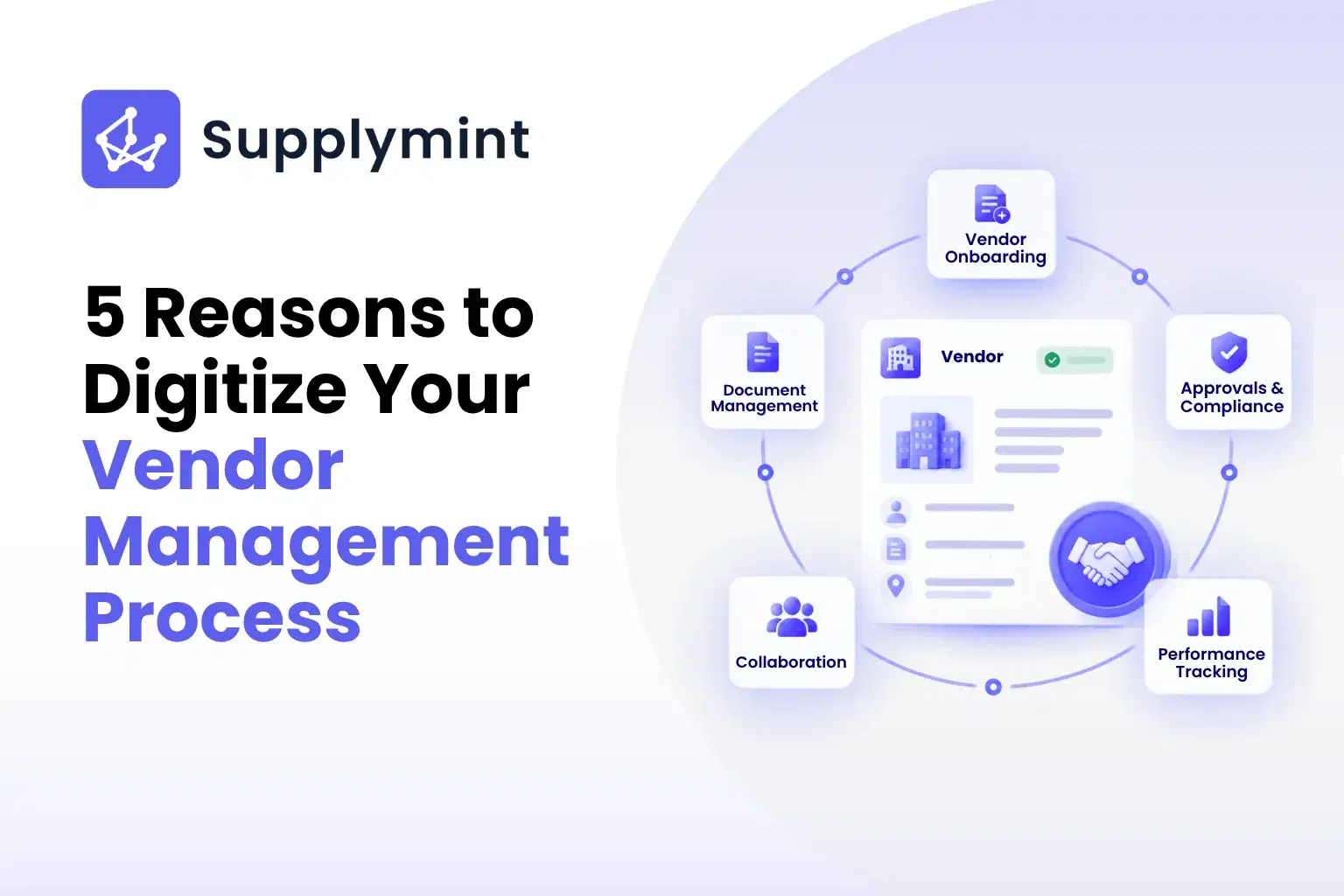
Vendors are central to how any business runs, and managing them is harder than it looks. Contracts to track, documents to chase, payments to follow up, onboarding that drags on for weeks. Handle all of that on spreadsheets and email, and the cracks show fast: information goes missing, risks hide in the gaps, and your team spends more time managing the process than managing the suppliers.
Digitizing vendor management fixes that. It moves the whole process onto one system, so onboarding, documents, communication, and performance all live in one place. Here are five reasons it is worth doing, and what changes once you do.
What Does Digitizing Vendor Management Mean?
Digitizing vendor management means replacing manual, spreadsheet-based processes with a single digital system that handles the entire vendor lifecycle. That covers onboarding, document storage, communication, performance tracking, and payments, all in one place instead of scattered across inboxes and drives. The goal is simple: less manual work, fewer errors, and a clear view of every supplier at once.
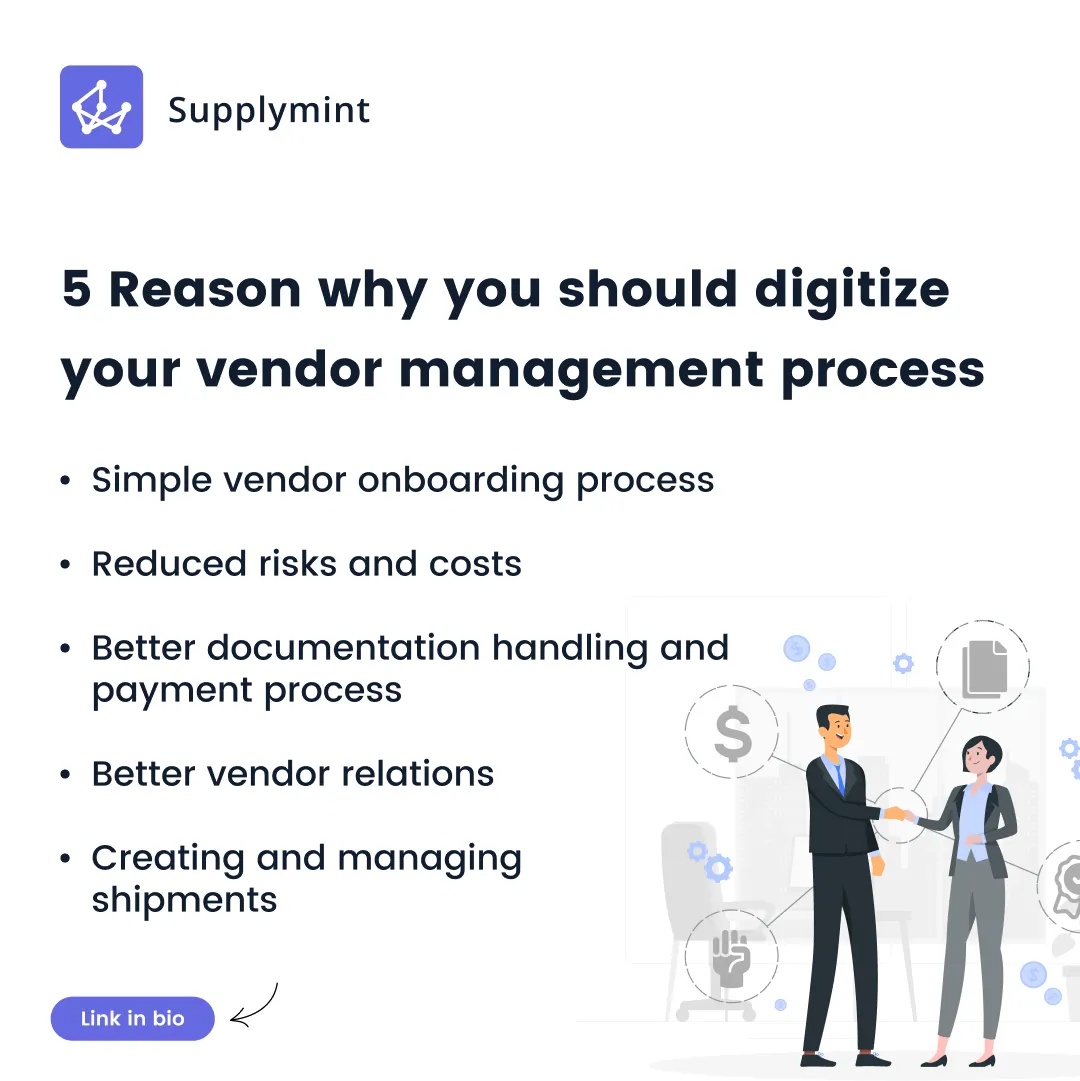
1. Faster, Simpler Vendor Onboarding
Digitizing onboarding cuts the time it takes to bring a new vendor on board, which is where manual processes waste the most time. Instead of collecting details over email and keying them in by hand, a digital system lets vendors submit their own information through a portal.
Everything you need sits in one place: bank details, order capacity, certifications, and regulatory data, captured once and stored centrally. That makes onboarding quick and, just as importantly, error-free, because the data comes straight from the source instead of being retyped. A slow onboarding process quietly costs productivity on every new supplier. A digital one gives that time back.
2. Lower Risk and Hidden Costs
Digitizing vendor management reduces risk by making supplier information visible instead of buried. When you manage risk through spreadsheets and shared drives, problems hide easily, a lapsed certification, a supplier in financial trouble, a performance slide nobody flagged.
A digital system tracks suppliers continuously and surfaces the warning signs early. You can verify qualifications, monitor performance, and check financial stability, so procurement managers can act before a risk becomes a disruption or a fraud. Visibility also exposes the costs that hide in manual processes, the duplicate orders and maverick spend that never show up until someone goes looking. You cannot control what you cannot see.
3. Better Document Handling and Payments
Digitizing vendor management solves the document problem that grows with every new supplier. Paper and scattered files are easy to misplace, and they wear out or get lost as volume climbs. A digital system keeps every contract, invoice, and record in one place, easy to find and safely stored for as long as you need it.
That order carries straight through to payments. When documents, purchase orders, and invoices all live in the same system, matching and approving payments is faster and cleaner, with far less of the back-and-forth that delays suppliers and strains relationships.
4. Stronger Vendor Relationships
Digitizing vendor management improves supplier relationships by making collaboration easy and data accurate. Clear communication and a shared, current view of orders and performance build trust on both sides, and trust is what turns a transactional supplier into a real partner.
Better relationships compound over time. They open the door to more business with the vendors who perform, longer-lasting partnerships, and a more loyal supplier base. That loyalty is worth the most exactly when supply gets tight, because the suppliers you have looked after are the ones who look after you first. A strong, well-managed vendor base is also the foundation of a more resilient supply chain.
5. Easier Shipment and Order Management
Digitizing vendor management makes creating and tracking orders and shipments far simpler, because all the data sits on one platform. Purchase indents, purchase orders, and inventory are visible and traceable in one place, instead of stitched together across systems.
Vendors get standard formats to raise their indents and orders quickly, and they can track shipments against each retailer without chasing anyone. For suppliers uploading catalogues, that visibility also means more reach and more sales with the retailers they already work with. The whole flow, from purchase indent to goods shipped, runs in one connected system rather than a chain of manual handoffs.
How to Start Digitizing Vendor Management
The practical first step is choosing a system that fits how your business actually buys, then bringing your vendors onto it in stages rather than all at once. Start with a clear picture of your current process and its worst bottlenecks, usually onboarding speed, document chaos, or no visibility into performance. Prioritise a system with a genuine vendor portal, since supplier self-service is where most of the time savings come from, and make sure it connects to the procurement and inventory tools you already run. Onboard your highest-volume or highest-risk vendors first, prove the value, then roll it out across the rest.
How Supplymint Helps
Supplymint digitizes vendor management inside one connected platform built for retail, apparel, and fashion brands. Through Supplymint's SourceToPay solution, vendors onboard through a self-service vendor portal, documents and communication stay centralised, performance is tracked automatically, and everything from purchase indent to shipment runs in one flow. Because vendor management sits in the same platform as procurement and inventory, supplier data connects directly to ordering and stock, which is exactly what retail needs. When the whole vendor process is digital and connected, managing a large supplier base stops being a burden and becomes an advantage.
Frequently Asked Questions
1. What does it mean to digitize vendor management?
Digitizing vendor management means replacing manual, spreadsheet-based processes with a single digital system that handles onboarding, documents, communication, performance tracking, and payments in one place. It reduces manual work and gives a clear view of every supplier.
2. Why should businesses digitize vendor management?
Because managing vendors manually gets slow and risky as the supplier base grows. Digitizing speeds up onboarding, reduces supplier risk by making data visible, improves document and payment handling, strengthens supplier relationships, and simplifies order and shipment management.
3. What are the benefits of a digital vendor management system?
The main benefits are faster onboarding, lower risk and hidden costs, better document and payment handling, stronger vendor relationships, and easier order and shipment management, all from having supplier data centralised and visible.
4. How do you start digitizing vendor management?
Map your current process and its biggest bottlenecks, choose a system with a real vendor portal that integrates with your procurement and inventory tools, then onboard your highest-volume or highest-risk vendors first before rolling it out to the rest.