Supplymint logo
usecase image

RFID-Integrated Inbound Receiving for Faster, Error-Free Goods Receipt

Procurement
Box-Packing
RFID

Team Involved

Supply Chain Managers, Logistics Heads, and Warehouse Teams

Inbound delays and receiving errors are costly bottlenecks in retail distribution. Warehouse teams often work with limited visibility into incoming shipments, leading to last-minute resource allocation, missed counts, and manual checks that slow everything down. Meanwhile, supply chain managers struggle to track whether vendors dispatched the correct goods and quantities. Without box-level transparency before the truck even arrives, receiving becomes a reactive scramble.

vendor

Vendors & Suppliers

From the vendor’s side, cartons are packed and shipped, but without a digital trail, there’s limited accountability or coordination. If discrepancies occur in receiving, wrong items, short quantities, or misplaced boxes, vendors are notified late, leading to disputes, delays in payment, and strained relationships.

The Objective

To help fast-moving retail supply chains proactively prepare for inbound deliveries, verify incoming goods accurately, and accelerate goods receipt using a digital-first approach. With Source To Pay, Supplymint enables businesses to receive box packing information before shipment arrives and match it to RFID-tagged cartons, eliminating manual checks and driving real-time, hands-free verification.

The Objective

Scope

This use case is driven entirely through Source To Pay, Supplymint’s Procurement Management platform. The solution empowers inbound warehouse teams, supply chain managers, and vendors with synchronized, RFID-enabled receiving workflows, delivering box-level detail, accurate reconciliation, and automated updates to inventory systems without manual scans or errors.

Scope

Our Solution for Warehouse & Logistics Teams

Solution Architecture

Advance Packing List with Box-Level Detail

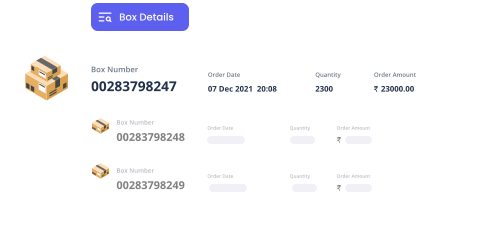
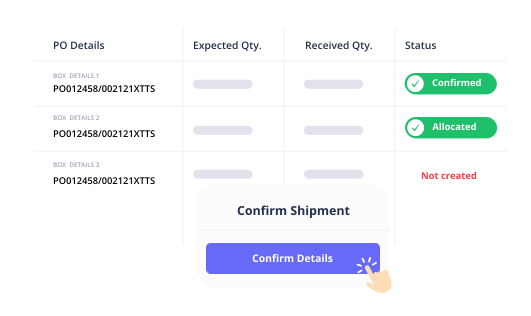
Before dispatch, vendors upload box-level packing data into Source to Pay. Each carton is tagged to its contents, SKUs, quantities, and PO references. This data syncs with the retailer’s system, giving warehouse teams a crystal-clear view of what’s coming in, even before the truck leaves the vendor’s location.

solution image

RFID-Tagged Shipments

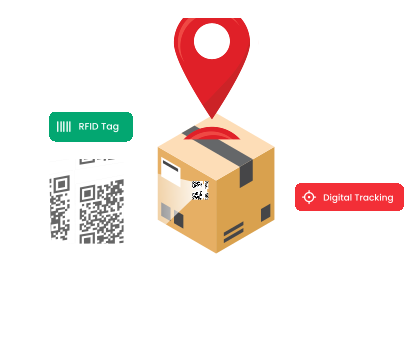
Each carton is assigned a unique RFID tag that maps to its digital entry in Source to Pay. This RFID tagging is what transforms the incoming shipment into a scannable, intelligent load. The warehouse receives both the physical box and its digital twin, ready for automated verification.

Instant, Bulk Scanning at Receiving

When shipments arrive, RFID readers scan multiple boxes simultaneously, with no need for barcode scanning or box opening. The system instantly pulls up expected contents and verifies them against the purchase order and packing data from Source to Pay. A full truckload can be processed in minutes, with near-perfect accuracy, no barcode scanning or box opening required.

Automated Matching & Discrepancy Alerts

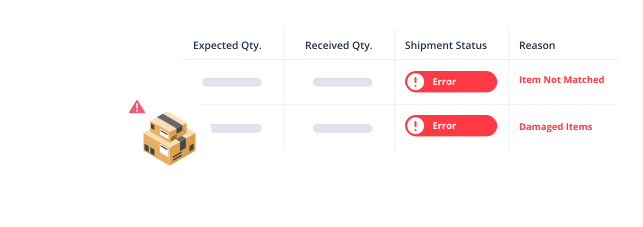
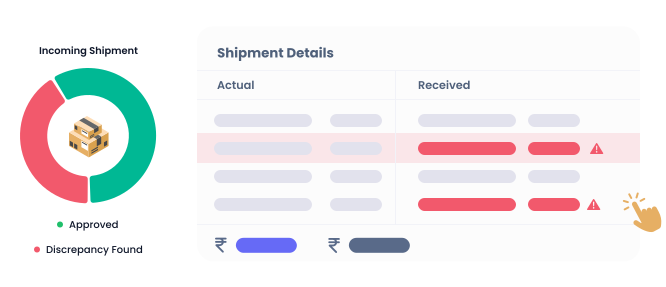
Source To Pay auto-matches received boxes to the PO and alerts teams in real time if there’s any mismatch or short receipt. There’s no need to audit manually or chase down discrepancies later; issues are flagged and resolved before stock even hits the shelves.

Live Dashboard for Visibility Across Teams

Inbound teams, supply chain managers, and vendors can all view live progress of incoming orders, box status, and match rate, all in a single interface. This closes the loop between planning, procurement, and receiving.

Key takeaway

This use case illustrates how Supplymint’s Source to Pay module streamlines warehouse inbound operations by integrating financial planning, shipment tracking, and logistics coordination. By aligning OTB budgeting with automated shipment notifications and structured dock appointments, retailers can achieve a cohesive and efficient supply chain, minimizing delays and optimizing inventory levels.