Supplymint logo
usecase image

Boost sales with the right stock in the right place to meet demand

Replenishment
Stock-Transfers

Team Involved

Buyer & Planning Teams

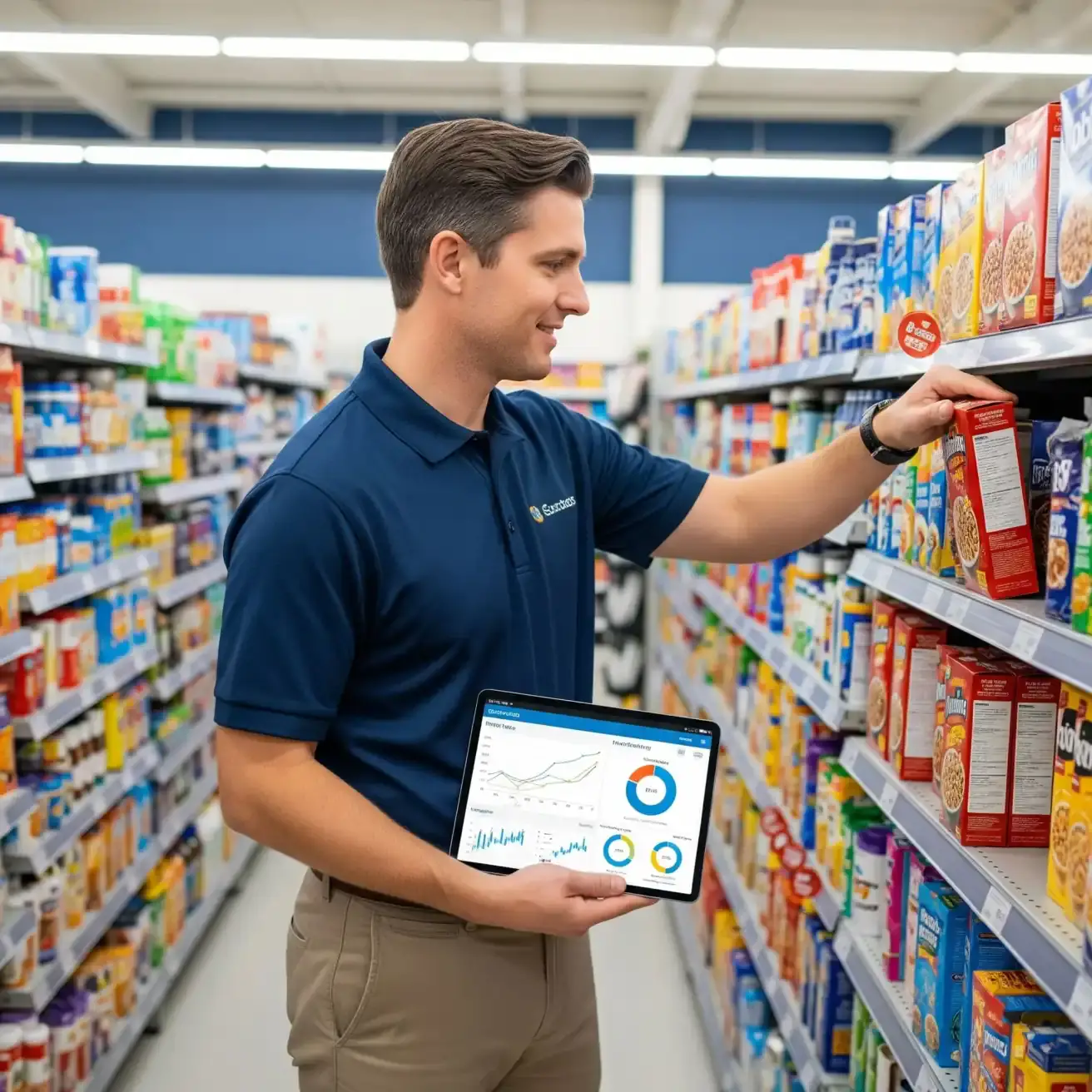
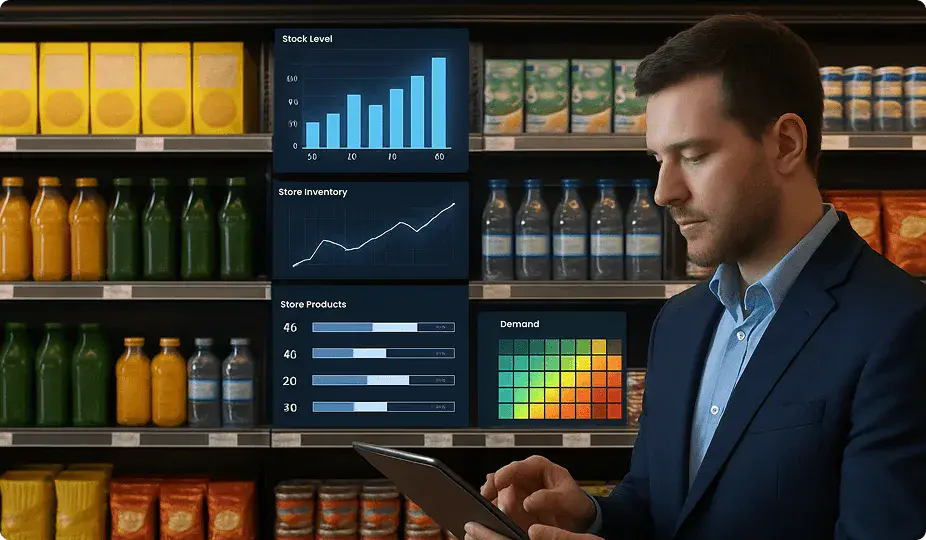
These strategic teams are accountable for maintaining optimal stock levels across all warehouse locations. Their core objectives include ensuring fast-selling items never go out of stock while also preventing excess inventory that ties up capital and increases carrying costs. To achieve this, they leverage Allokator’s real-time inventory dashboards and predictive analytics. These tools continuously monitor consumption trends, lead times, and buffer thresholds to automatically trigger replenishment well before stock levels dip critically.

vendor

Warehouse Operations Teams

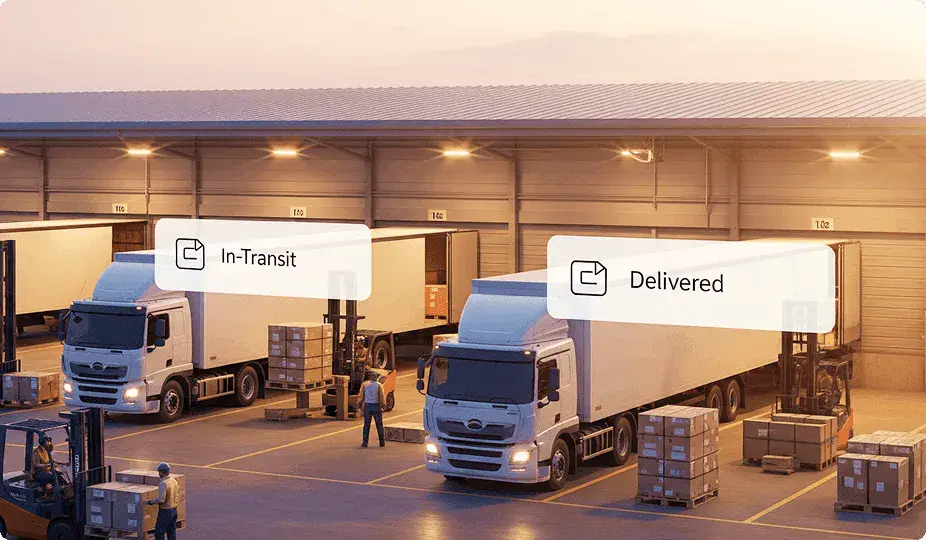
Warehouse supervisors and frontline staff are at the heart of execution, responsible for receiving replenishment tasks, picking items, restocking shelves, and physically transporting inventory across zones. Planning enhances their efficiency by delivering digital task lists directly to their mobile devices or warehouse terminals, sorted by priority and location. The platform sends real-time alerts when replenishment is due or when thresholds are breached, ensuring staff can act immediately.

Workflow Mission

To help retailers strengthen warehouse replenishment by ensuring that fast-moving and high-demand products are always available where and when they’re needed, boosting sales, reducing stockouts, and minimizing excess inventory. By enabling data-driven planning and digitized execution, this workflow empowers teams to act faster, operate leaner, and respond more accurately to real-world demand.

Workflow Mission

Scope

This use case focuses on intra-warehouse replenishment operations, ensuring that products are efficiently restocked across warehouse zones or between nearby warehouse locations to maintain optimal availability. The scope includes real-time monitoring of inventory thresholds, automated replenishment triggers based on demand signals, digital task allocation for warehouse teams, and synchronized inventory data across WMS, ERP, and POS systems. It does not cover inter-store transfers or direct-to-store allocation, which are managed through separate workflows within Planning.

Scope

Our Solution for Buyers & Retailers

Solution Architecture

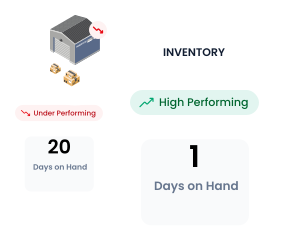
Inventory Threshold Monitoring & Auto-Triggers

AlloAllokator tracks real-time stock levels across warehouses and automatically triggers replenishment when SKU quantities dip below predefined thresholds. This ensures proactive action before stockouts occur and avoids manual monitoring delays.

Inventory Threshold Monitoring & Auto-Triggers

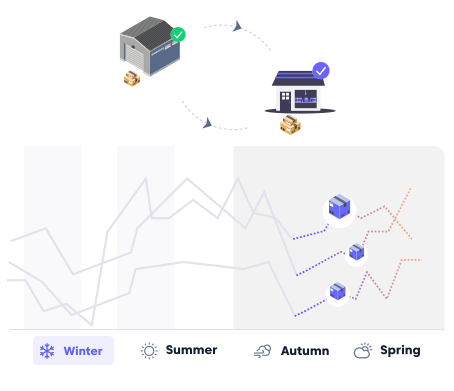
Demand-Driven Replenishment Calculations

Instead of static rules, replenishment quantities are dynamically calculated using sales velocity, seasonal demand, and lead times. This helps maintain ideal buffer stock without inflating holding costs or causing excess inventory.

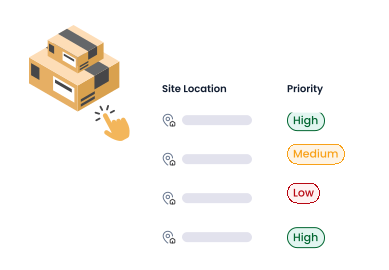
Digital Pick & Restock Task Allocation

Warehouse teams receive digitally assigned replenishment tasks prioritized by SKU and location. This reduces manual coordination, shortens picking paths, and ensures faster, more accurate restocking at scale.

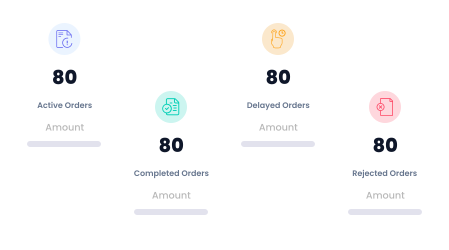
Centralized Replenishment Dashboard

Planning and warehouse teams work from a shared dashboard showing active, completed, and delayed tasks. Predictive alerts for low stock, exceptions, and fulfillment bottlenecks help teams take timely action.

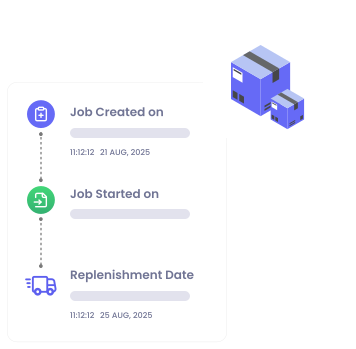
End-to-End Traceability of Stock Movements

Every replenishment action, from task assignment to execution, is logged digitally. This enables full visibility, operational accountability, and historical analysis of warehouse performance.

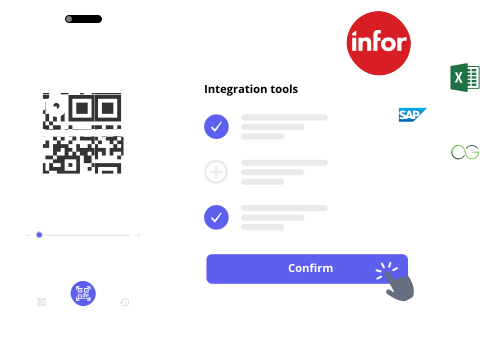
Seamless Integrations Across Systems

Planning syncs with existing WMS, ERP, and POS systems to keep inventory data unified and up to date. This ensures accurate decision-making and eliminates errors from manual updates or data silos.

Key takeaway

This use case showcases how Supplymint’s Planning module optimizes warehouse replenishment by automating stock monitoring, task allocation, and demand-based restocking, all in real time. With this solution, planning and warehouse teams can:

Prevent stockouts by triggering replenishment before thresholds are breached.

Maintain optimal inventory levels using dynamic, demand-led replenishment logic.

Eliminate manual task delegation and coordination with digitally assigned restock tasks.

Streamline warehouse workflows through centralized dashboards and predictive alerts.

Improve accountability and decision-making with end-to-end traceability of stock movements.

Ensure accurate, up-to-date inventory data across WMS, ERP, and POS systems through seamless integration.

By transforming replenishment from a reactive process into a proactive, automated operation, Planning helps retailers improve warehouse efficiency, reduce holding costs, and keep shelves stocked exactly when and where it matters.